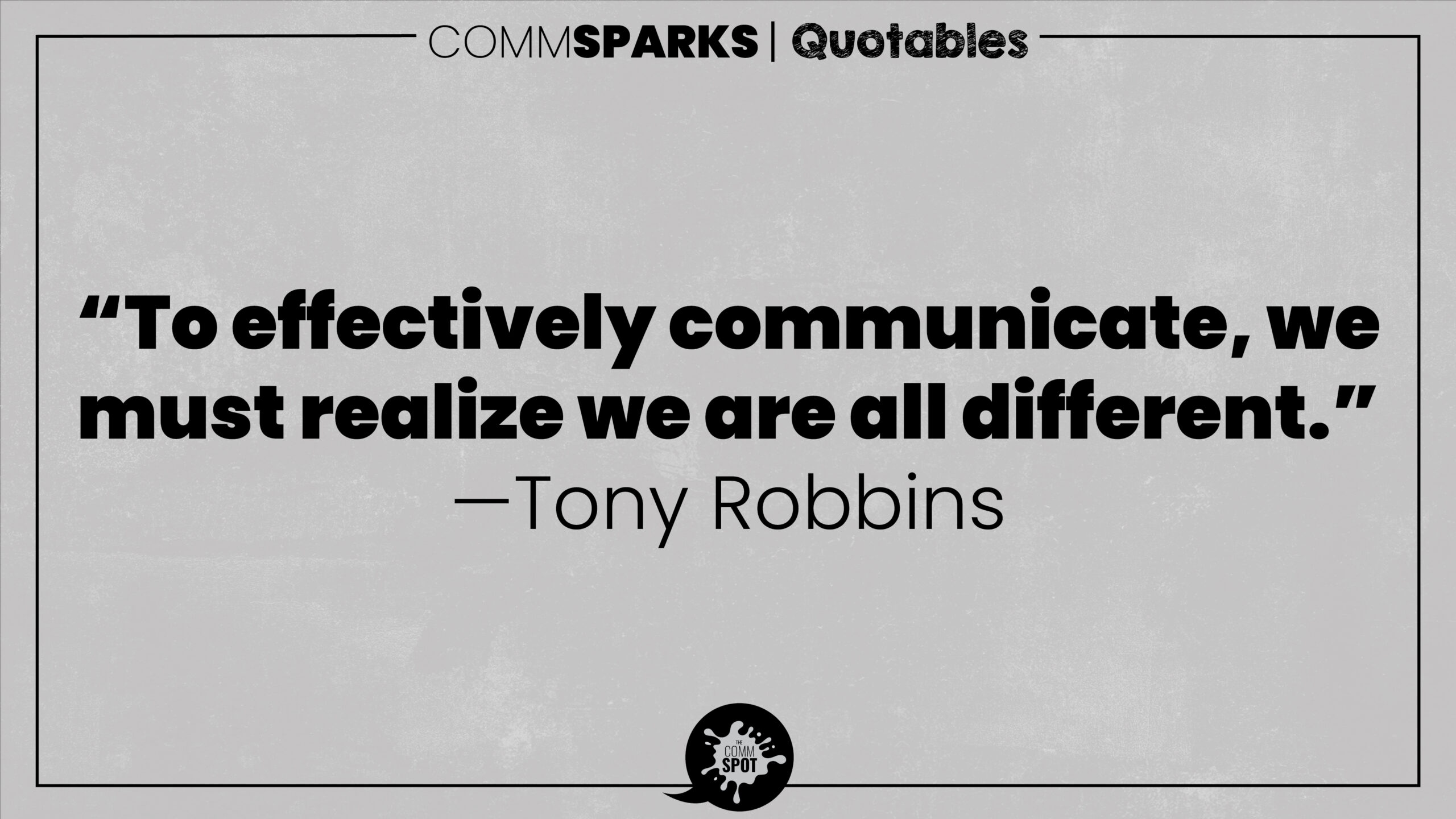
This principle recognizes that communication is filtered through differences in experience, values, knowledge, culture, and cognitive style. A message does not arrive as a neutral package; it is interpreted through what matters to the recipient and what the recipient expects. Assuming sameness leads to predictable failures: jargon that excludes, examples that don’t resonate, tone that lands as dismissive, or appeals that motivate the wrong behavior. “Different” does not only mean demographic difference—it includes role-based differences (executive vs. frontline), expertise differences (novice vs. specialist), and situational differences (stressed vs. calm, skeptical vs. receptive).
Realizing difference changes how communication is designed. It encourages adaptation in framing, structure, and support. Some audiences need context; others need brevity. Some need reassurance; others need evidence. Some respond to narrative; others respond to process and criteria. Effective communication anticipates these differences and offers paths to understanding—clear definitions, layered detail (summary plus depth), and examples that meet the audience where they are.
The goal is not personalization for every individual, but thoughtful calibration for major audience segments. When communication accounts for difference, it becomes more inclusive and more effective. When it ignores difference, it tends to reward insiders and lose everyone else.
General application:
- Segment audiences by role, knowledge, and motivation—not just demographics.
- Provide layered information (summary first, detail second).
- Use inclusive language, clear definitions, and examples that fit the audience.