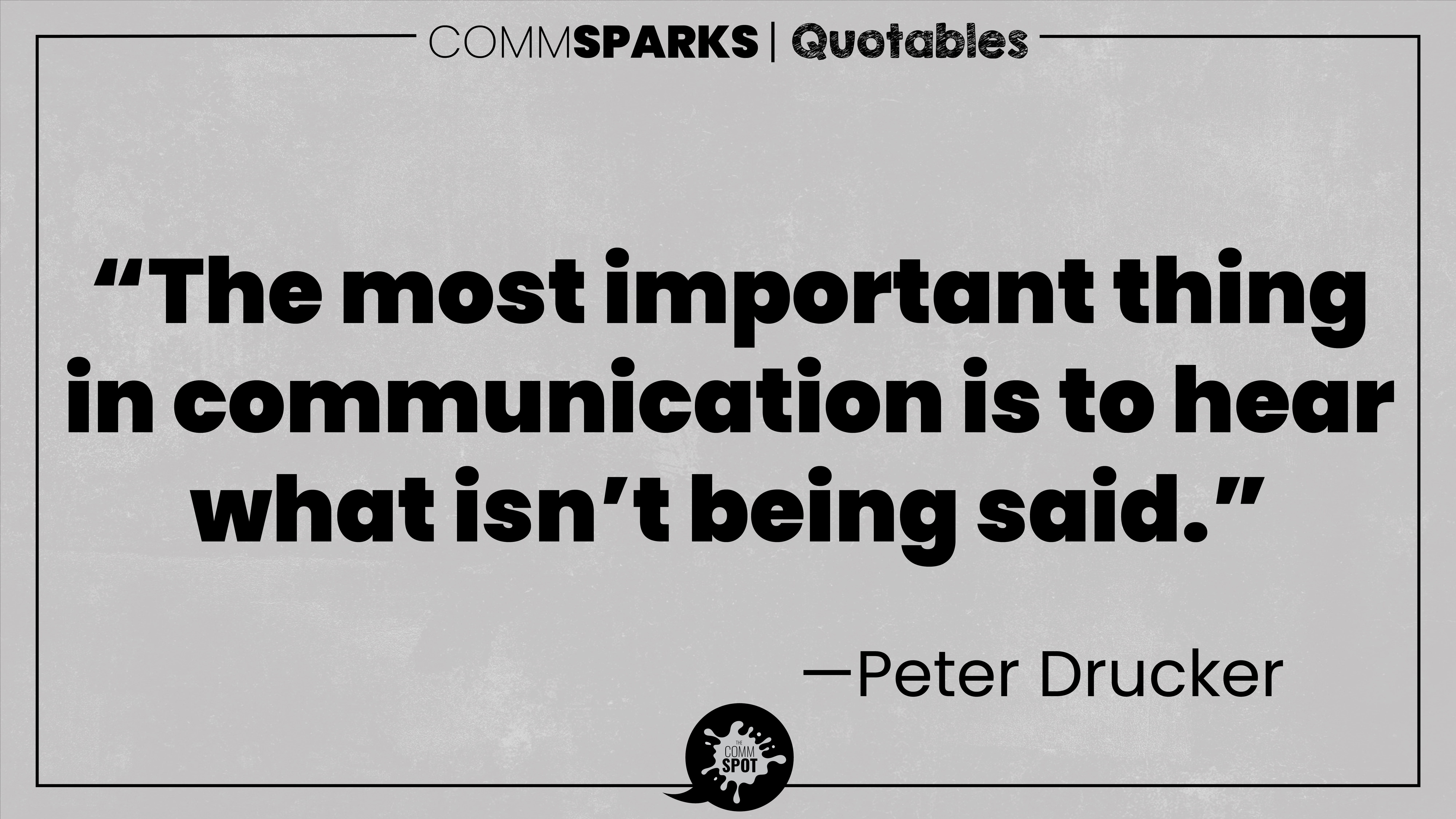
Peter Drucker’s famous insight captures one of the most underrated communication skills: perceptive listening. Real communication isn’t just about decoding words; it’s about interpreting context, emotion, and silence. Often, the most important message is the one that never crosses someone’s lips.
When someone says, “I’m fine,” but their tone trembles, or when a team member nods in agreement but avoids eye contact, something deeper is being communicated. Great communicators notice those cues and respond to meaning, not just language.
Listening for what isn’t said requires presence. It means putting away assumptions and distractions to observe the whole person — facial expressions, pauses, energy, and subtext. In leadership, it means recognizing when morale is low even though productivity is high, or when a colleague’s silence signals discomfort rather than consent.
This kind of awareness builds trust because it shows empathy. It tells people, I see you. I get it. You don’t need to solve everything immediately; sometimes simply acknowledging the unspoken is enough.
So, the next time you’re in conversation, listen beyond the literal. Ask yourself, What emotion is underneath this message? What’s not being said out loud?
Because the best communicators don’t just hear — they understand.