Skip to content
The Comm Spot The Comm Spot

It's All About Communication

  • HOME
  • ABOUT
    • Meet the Creator: Curtis Newbold, PhD
    • Hire Curtis
    • Publish with Us
    • Contact
    • Privacy Notice
  • COMM-BASICS
    • Glossary
    • Citation & Style Guides
      • AP Style (Journalism)
        • AP Style Overview
        • AP Style Guidelines
        • Media Ethics – SPJ Code of Ethics
        • Elements of Newsworthiness
      • APA Style
        • APA Format – Overview
        • APA - References Guidelines
        • APA - In-text Citations
        • APA - Citing Authors
        • APA - Audiovisual Media
        • APA - Books
        • APA - Digital Sources
        • APA - Events & Interactions
        • APA - Periodicals
        • APA - Print Sources (other than books)
      • Chicago Style
        • Chicago – Overview
        • Chicago - Author-Date System
        • Chicago - Notes-Bibliography System
        • Chicago - In-text Citations
        • Chicago Style - Citing Authors
        • Chicago - Audiovisual Media
        • Chicago - Books
        • Chicago - Digital Sources
        • Chicago - Events and Interactions
        • Chicago - Citing Periodicals
        • Chicago - Print Sources (other than books)
      • MLA Style
        • MLA Overview
        • MLA Works Cited Pages
        • MLA In-text Citations
        • MLA – Authors
        • MLA – Audiovisual Media
        • MLA – Books
        • MLA – Digital Sources
        • MLA – Events & Interactions
        • MLA – Periodicals
        • MLA – Print Sources (other than books)
    • Rhetoric
      • Overview of Rhetoric
      • Rhetorical Appeals (Rhetorical Triangle)
      • Branches of Oratory
      • Canons of Rhetoric
      • Rhetorical Devices
      • Kairos
      • Topos
      • Key Figures in Rhetoric
    • Research Methods
      • Case Studies
      • Competitor Analysis
      • Content Analysis
      • Discourse Analysis
      • Ethnography
      • Focus Groups
      • Observation Research
      • S.W.O.T. Analysis
      • Secondary Research
      • Surveys
      • Target Market Analysis
      • Usability Testing
      • Visual Analysis
    • Theories
    • Thinkers
  • COMM-SUBJECTS
    • Interpersonal Communication
      • Active Listening
      • Body Language
      • Conflict Management
      • Emotional Intelligence
        • Emotional Intelligence Overview
        • Self-Awareness
        • Self-Regulation
        • Motivation
        • Empathy
        • Social Skills
        • Emotional Intelligence Resources
      • Feedback
      • Negotiation
        • Overview of Negotiation
        • Negotiation Skills
        • Negotiation Strategies & Techniques
        • Stages of Negotiation
        • Common Negotiation Scenarios
        • Negotiation Case Studies & Examples
        • Negotiation Tools & Resources
        • Negotiation FAQ
    • Journalism
    • Public Speaking
      • General Guidelines
      • Overcoming Fear
      • Speech Writing and Organization
      • Delivery Techniques
      • Body Language
      • Audience Engagement
      • Storytelling
      • Designing Slides
      • P.O.W.E.R.F.U.L. Presentation Method
    • Strategic Communication
      • Business & Org Comm
        • Definition & History
        • Org Comm Theories
        • Business Documents
        • Change Management
        • Employee Relations
        • Employment Communication
        • Group & Team Communication
        • Leadership Communication
        • Power, Identity, & Ethics at Work
        • Project Management
      • Integrated Marketing Comm
        • Definition of IMC
        • Core Principles of IMC
        • IMC Planning
        • Audience Segmentation
        • Marketing Channels
        • Message Strategies
        • Campaign Measurement & Evaluation
        • Trends & Innovations in IMC
        • Challenges & Pitfalls in IMC
        • Careers & Roles in IMC
      • Public Relations
        • Foundations in PR
        • Strategic Practice
        • Tools & Tactics
        • Research & Analysis
        • Professional Development
      • Case Studies in Strat Comm
    • Technical & Scientific Communication
    • Visual Communication
      • Data Visualization
      • Information Design
      • Photography
      • Web Design
    • Written Communication
      • Writing Process
      • Organizational Methods
        • Five Paragraph Essay
        • Hourglass Method of Writing
        • IMRaD Format (Science)
        • Indirect Method (Bad News)
        • Inverted Pyramid (Journalism)
        • Martini Glass
        • Narrative Format
        • Proposal Format
        • Rogerian Method
        • Toulmin Method
      • Plain Language
        • Audience (Plain Language)
        • Organization (Plain Language)
        • Conversation (Plain Language)
        • Simplicity (Plain Language)
        • Word Choice (Plain Language)
        • Sentence Structure (Plain Language)
        • Design (Plain Language)
      • Punctuation
        • Apostrophes
        • Brackets
        • Colons
        • Commas
        • Ellipses
        • Em Dashes
        • En Dashes
        • Exclamation Marks
        • Hyphens
        • Parentheses
        • Periods
        • Question Marks
        • Quotation Marks
        • Semicolons
      • Style
        • Clarity
        • Conciseness
        • Consistency
        • Editing
        • Flow
        • Rhetorical Devices
        • Sentence Structure
        • Storytelling
        • Tone
        • Voice
        • Word Choice
  • RESOURCES
    • Teaching Resources
      • Assignments & Activities
      • Instructional Design
      • Pedagogies
  • BLOGS
    • The Spotlight Blog
    • Comm Sparks
  • SHOP
    • Cart
    • Checkout
0
The Comm Spot
The Comm Spot

It's All About Communication

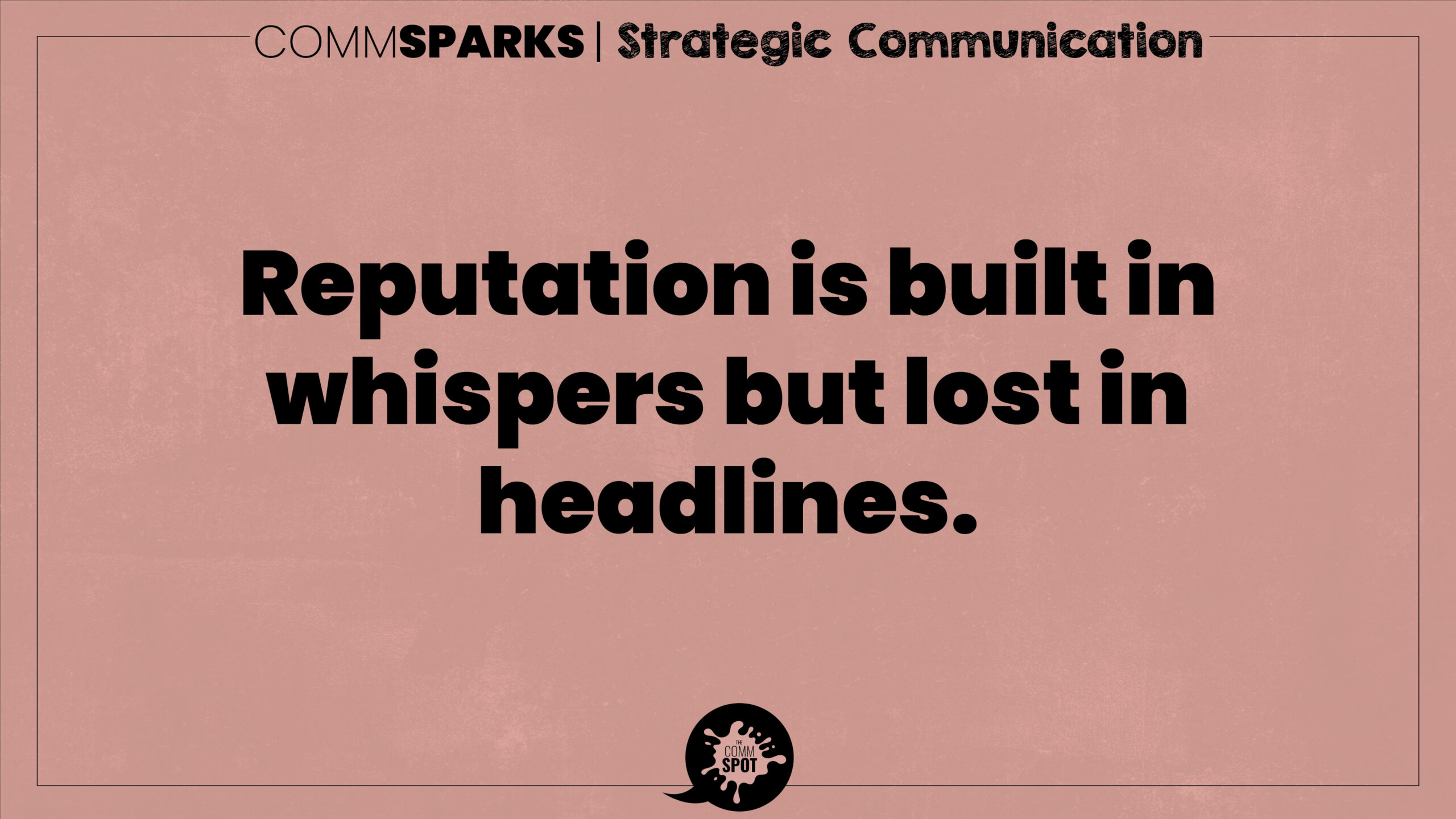
Reputation Is Built in Whispers but Lost in Headlines

Posted on October 7, 2025October 7, 2025 By Comm Spot Editorial Staff
  • Facebook
  • LinkedIn

Reputation is one of the most fragile and valuable assets any person or organization possesses. It’s built slowly — through hundreds of unseen moments — and it can be shattered instantly when those small moments are betrayed. That’s why reputation management isn’t a crisis function; it’s a daily discipline.

The strongest reputations grow quietly, in the whispers of how you treat people when no one’s watching, how you follow through on commitments, and how consistently your words match your actions. Over time, those whispers form a chorus of trust. People come to expect reliability, empathy, and professionalism — and that expectation is your reputation.

But headlines are loud, and they spread fast. When a brand, leader, or professional fails to live up to their values, the story travels further than the years of good deeds that preceded it. This imbalance may seem unfair, but it’s the reality of perception. Once credibility cracks, rebuilding it takes transparency, accountability, and time.

The lesson is simple: don’t wait for a headline to test your integrity. Lead with it every day. Double-check your tone, your timing, and your truthfulness. When your actions are consistent with your values, you build a reputation that can weather even difficult moments.

In communication, reputation isn’t written in press releases — it’s written in trust.
And trust, once lost, can’t be spun back into place.
Comm Sparks

Post navigation

Previous post
Next post

Related Posts

Comm Sparks

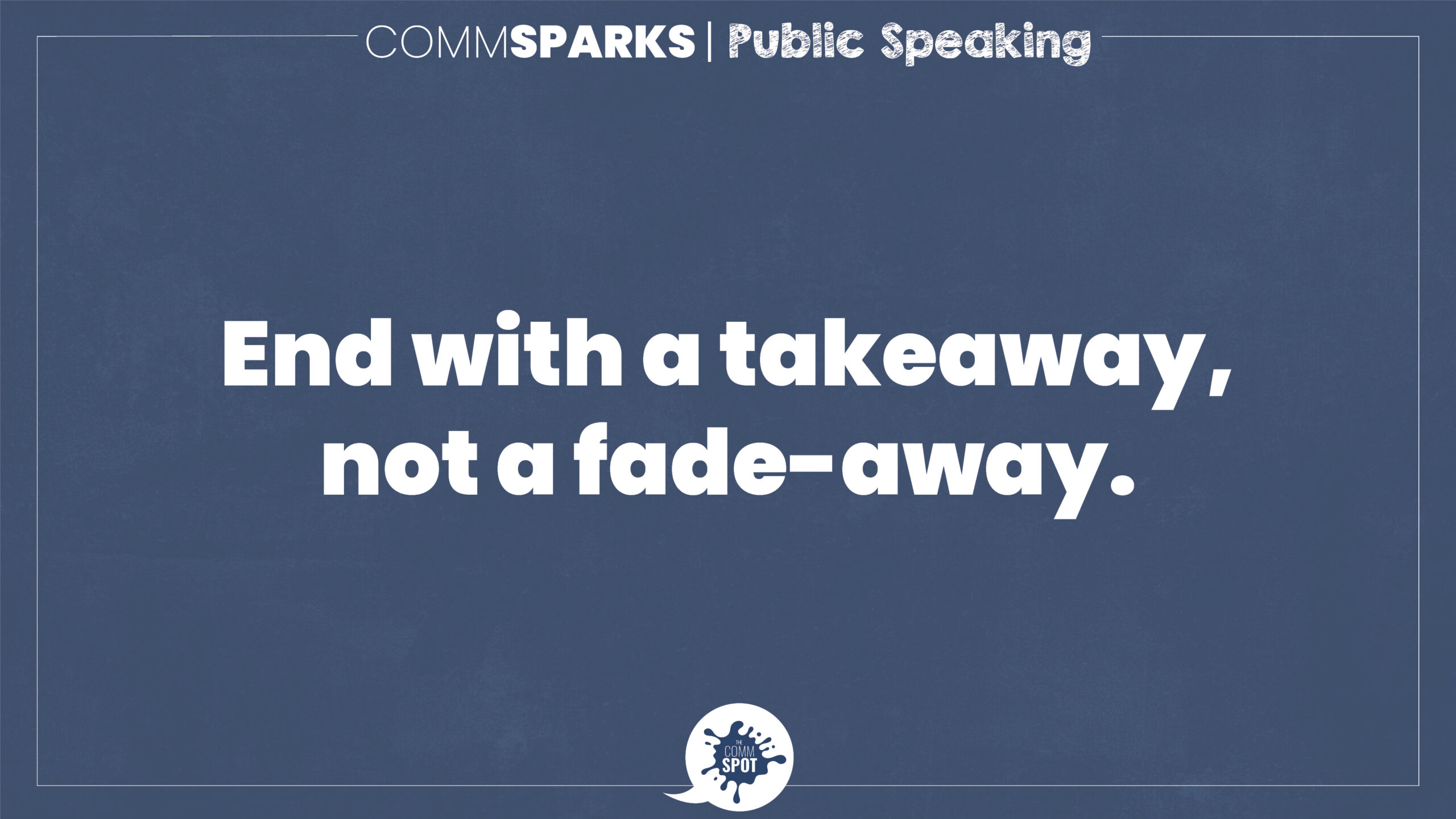
End with a takeaway, not a fade-away.

Posted on January 6, 2026January 6, 2026

Facebook LinkedIn Endings determine what survives. Even strong content can lose impact if it ends without consolidation, direction, or closure. A fade-away ending—trailing into vague appreciation, minor details, or “any questions?”—signals that the message has no clear point. A takeaway ending, by contrast, deliberately shapes memory and action. It clarifies…

Read More
Comm Sparks

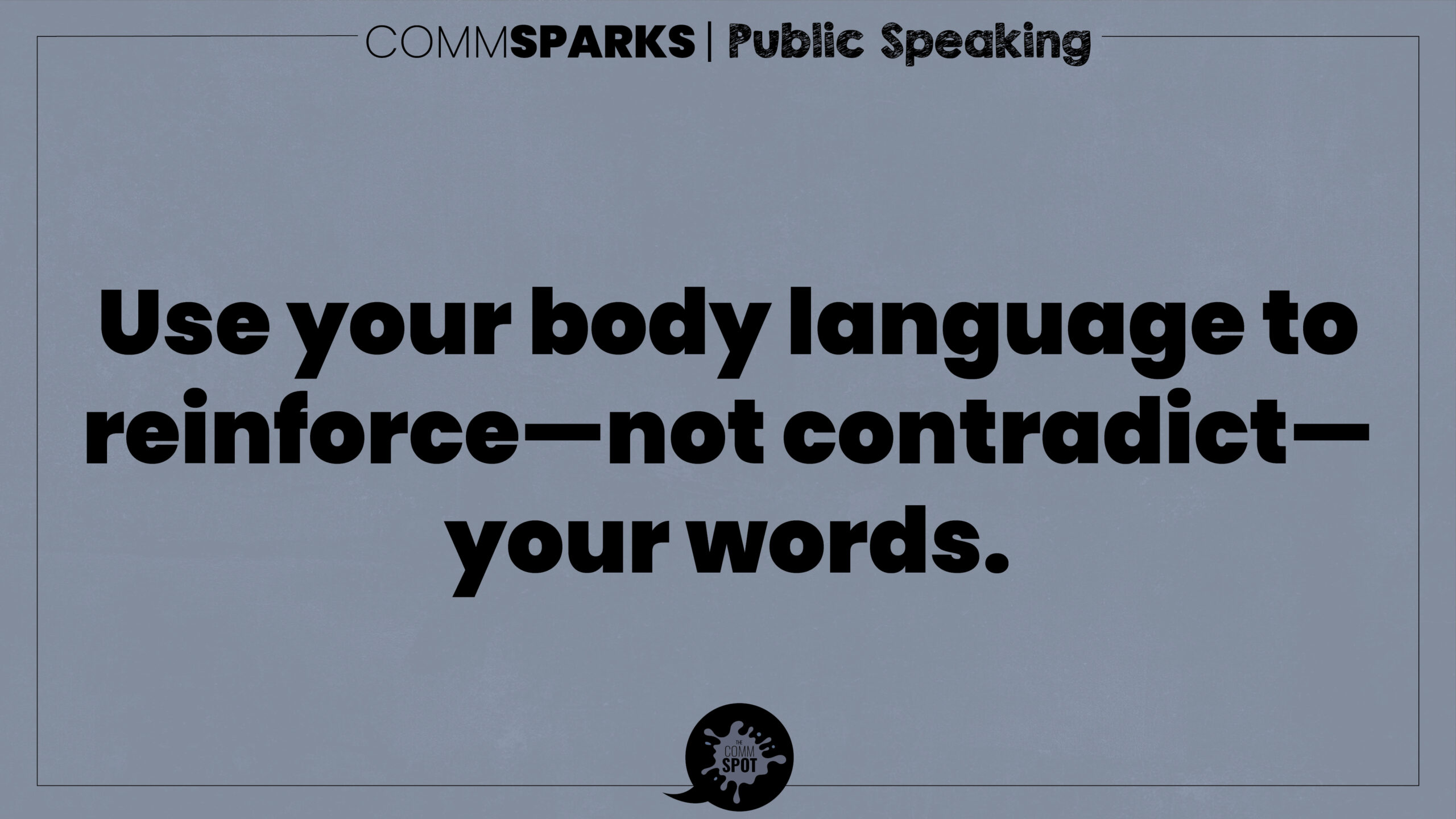
Use your body language to reinforce — not contradict — your words

Posted on October 7, 2025October 7, 2025

Facebook LinkedIn Audiences believe what they see more than what they hear. You might speak eloquently about confidence, but if your arms are crossed and your eyes are down, your body tells another story. Nonverbal communication carries enormous weight in every interaction. Studies estimate that as much as two-thirds of…

Read More
Comm Sparks

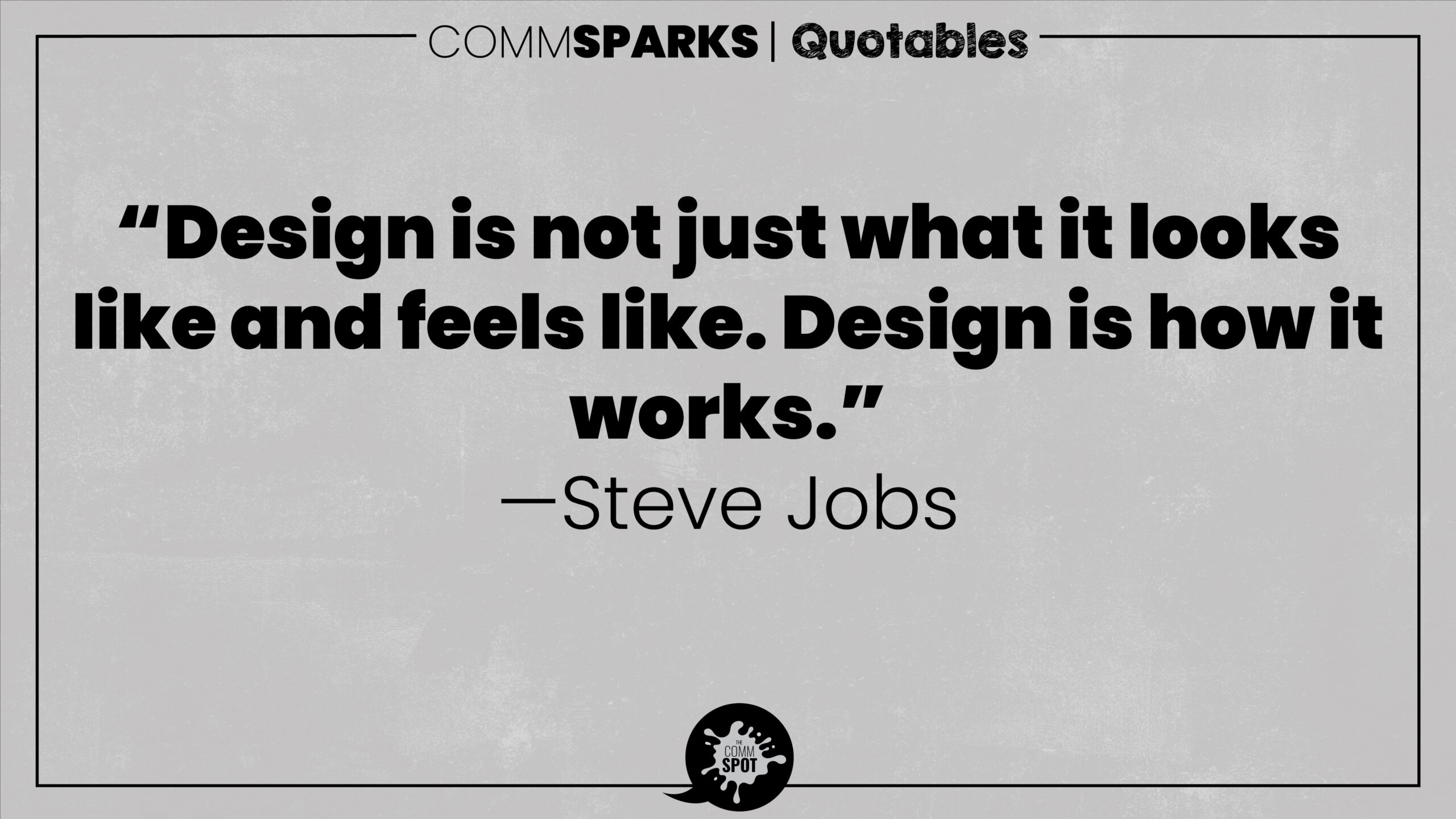
“Design is not just what it looks like and feels like. Design is how it works.” — Steve Jobs

Posted on January 6, 2026January 6, 2026

Facebook LinkedIn This principle shifts attention from aesthetics to function. Design is not primarily decoration; it is a system that shapes understanding and action. A layout, interface, chart, or document can look polished and still fail if people can’t find what they need, interpret what they see, or complete the…

Read More

  • facebook
  • instagram
  • linkedin

DON'T MISS ANY SPOT-ON TIPS!

We don't spam! You'll only get emails when we post something awesome.
You can unsubscribe at any time.

Check your inbox or spam folder to confirm your subscription.

©2025 | The Comm Spot | By Newbold Communication & Design