
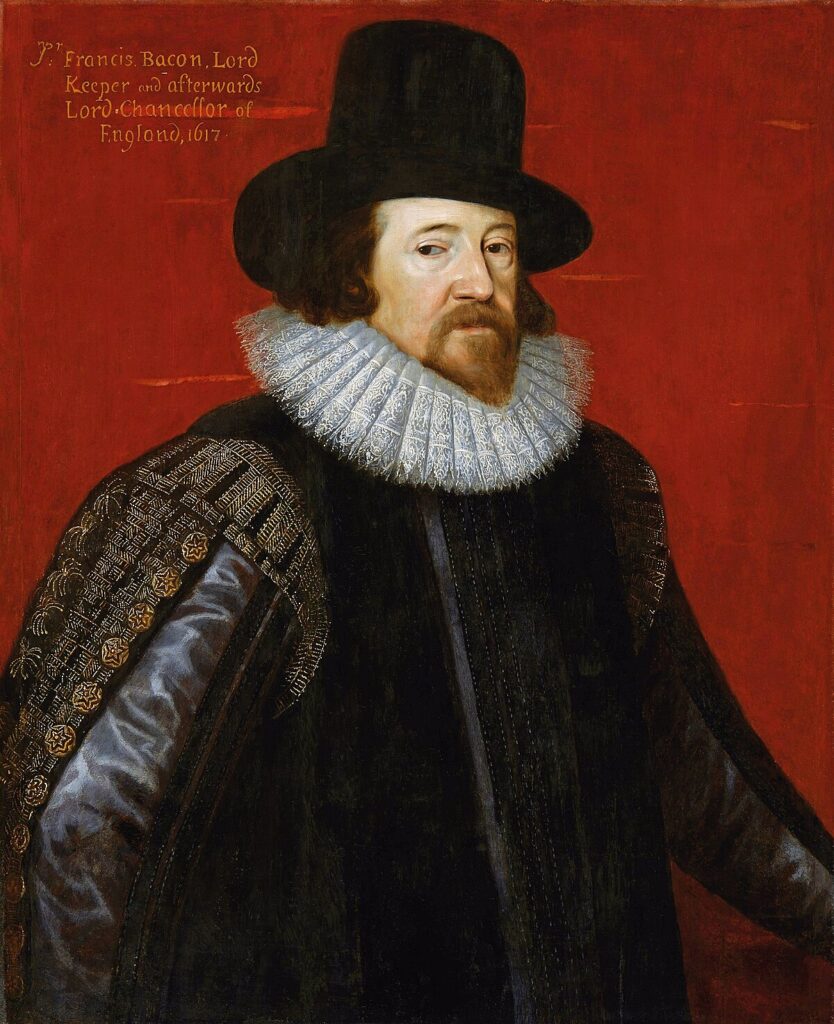
Who Was Francis Bacon?
Francis Bacon, born in 1561 in London, England, was a philosopher, statesman, scientist, jurist, and author. He served as Attorney General and Lord Chancellor of England, but he is best remembered for his contributions to philosophy and the development of the scientific method. Bacon’s works laid the groundwork for modern scientific inquiry and emphasized the importance of empirical evidence and inductive reasoning. His influential books include “The Advancement of Learning,” “Novum Organum,” and “The New Atlantis.”
Bacon’s Teachings on Rhetoric
Francis Bacon viewed rhetoric as an essential tool for the advancement of knowledge and the communication of scientific ideas. In “The Advancement of Learning,” he categorized human knowledge into three parts: history, poetry, and philosophy, with rhetoric falling under the domain of philosophy. Bacon believed that rhetoric was crucial for persuading audiences and for the effective dissemination of knowledge. He emphasized the practical application of rhetoric in public discourse and scientific communication, advocating for a style that was clear, concise, and grounded in empirical evidence. Bacon’s approach to rhetoric was pragmatic, focusing on its utility in advancing human understanding and facilitating progress in various fields of study.
Bacon’s Influence on the Study of Rhetoric and Communication
Francis Bacon’s integration of rhetorical principles with the scientific method helped to transform the way knowledge was communicated and understood. His emphasis on empirical evidence and inductive reasoning reshaped the foundations of rhetorical practice, making it more systematic and focused on the pursuit of truth. Bacon’s ideas paved the way for the Enlightenment and the subsequent development of modern scientific and philosophical thought. His call for clarity and precision in rhetorical expression influenced the writing and speaking styles of many subsequent thinkers and educators. Moreover, Bacon’s work underscored the importance of rhetoric in public discourse and education, contributing to its recognition as a vital component of intellectual inquiry and civic engagement.
*Content on this page was curated and edited by expert humans with the creative assistance of AI.