Skip to content
The Comm Spot The Comm Spot

It's All About Communication

  • HOME
  • ABOUT
    • Meet the Creator: Curtis Newbold, PhD
    • Hire Curtis
    • Publish with Us
    • Contact
    • Privacy Notice
  • COMM-BASICS
    • Glossary
    • Citation & Style Guides
      • AP Style (Journalism)
        • AP Style Overview
        • AP Style Guidelines
        • Media Ethics – SPJ Code of Ethics
        • Elements of Newsworthiness
      • APA Style
        • APA Format – Overview
        • APA - References Guidelines
        • APA - In-text Citations
        • APA - Citing Authors
        • APA - Audiovisual Media
        • APA - Books
        • APA - Digital Sources
        • APA - Events & Interactions
        • APA - Periodicals
        • APA - Print Sources (other than books)
      • Chicago Style
        • Chicago – Overview
        • Chicago - Author-Date System
        • Chicago - Notes-Bibliography System
        • Chicago - In-text Citations
        • Chicago Style - Citing Authors
        • Chicago - Audiovisual Media
        • Chicago - Books
        • Chicago - Digital Sources
        • Chicago - Events and Interactions
        • Chicago - Citing Periodicals
        • Chicago - Print Sources (other than books)
      • MLA Style
        • MLA Overview
        • MLA Works Cited Pages
        • MLA In-text Citations
        • MLA – Authors
        • MLA – Audiovisual Media
        • MLA – Books
        • MLA – Digital Sources
        • MLA – Events & Interactions
        • MLA – Periodicals
        • MLA – Print Sources (other than books)
    • Rhetoric
      • Overview of Rhetoric
      • Rhetorical Appeals (Rhetorical Triangle)
      • Branches of Oratory
      • Canons of Rhetoric
      • Rhetorical Devices
      • Kairos
      • Topos
      • Key Figures in Rhetoric
    • Research Methods
      • Case Studies
      • Competitor Analysis
      • Content Analysis
      • Discourse Analysis
      • Ethnography
      • Focus Groups
      • Observation Research
      • S.W.O.T. Analysis
      • Secondary Research
      • Surveys
      • Target Market Analysis
      • Usability Testing
      • Visual Analysis
    • Theories
    • Thinkers
  • COMM-SUBJECTS
    • Interpersonal Communication
      • Active Listening
      • Body Language
      • Conflict Management
      • Emotional Intelligence
        • Emotional Intelligence Overview
        • Self-Awareness
        • Self-Regulation
        • Motivation
        • Empathy
        • Social Skills
        • Emotional Intelligence Resources
      • Feedback
      • Negotiation
        • Overview of Negotiation
        • Negotiation Skills
        • Negotiation Strategies & Techniques
        • Stages of Negotiation
        • Common Negotiation Scenarios
        • Negotiation Case Studies & Examples
        • Negotiation Tools & Resources
        • Negotiation FAQ
    • Journalism
    • Public Speaking
      • General Guidelines
      • Overcoming Fear
      • Speech Writing and Organization
      • Delivery Techniques
      • Body Language
      • Audience Engagement
      • Storytelling
      • Designing Slides
      • P.O.W.E.R.F.U.L. Presentation Method
    • Strategic Communication
      • Business & Org Comm
        • Definition & History
        • Org Comm Theories
        • Business Documents
        • Change Management
        • Employee Relations
        • Employment Communication
        • Group & Team Communication
        • Leadership Communication
        • Power, Identity, & Ethics at Work
        • Project Management
      • Integrated Marketing Comm
        • Definition of IMC
        • Core Principles of IMC
        • IMC Planning
        • Audience Segmentation
        • Marketing Channels
        • Message Strategies
        • Campaign Measurement & Evaluation
        • Trends & Innovations in IMC
        • Challenges & Pitfalls in IMC
        • Careers & Roles in IMC
      • Public Relations
        • Foundations in PR
        • Strategic Practice
        • Tools & Tactics
        • Research & Analysis
        • Professional Development
      • Case Studies in Strat Comm
    • Technical & Scientific Communication
    • Visual Communication
      • Data Visualization
      • Information Design
      • Photography
      • Web Design
    • Written Communication
      • Writing Process
      • Organizational Methods
        • Five Paragraph Essay
        • Hourglass Method of Writing
        • IMRaD Format (Science)
        • Indirect Method (Bad News)
        • Inverted Pyramid (Journalism)
        • Martini Glass
        • Narrative Format
        • Proposal Format
        • Rogerian Method
        • Toulmin Method
      • Plain Language
        • Audience (Plain Language)
        • Organization (Plain Language)
        • Conversation (Plain Language)
        • Simplicity (Plain Language)
        • Word Choice (Plain Language)
        • Sentence Structure (Plain Language)
        • Design (Plain Language)
      • Punctuation
        • Apostrophes
        • Brackets
        • Colons
        • Commas
        • Ellipses
        • Em Dashes
        • En Dashes
        • Exclamation Marks
        • Hyphens
        • Parentheses
        • Periods
        • Question Marks
        • Quotation Marks
        • Semicolons
      • Style
        • Clarity
        • Conciseness
        • Consistency
        • Editing
        • Flow
        • Rhetorical Devices
        • Sentence Structure
        • Storytelling
        • Tone
        • Voice
        • Word Choice
  • RESOURCES
    • Teaching Resources
      • Assignments & Activities
      • Instructional Design
      • Pedagogies
  • BLOGS
    • The Spotlight Blog
    • Comm Sparks
  • SHOP
    • Cart
    • Checkout
0
The Comm Spot
The Comm Spot

It's All About Communication

Creative Résumé

Home >Communication Basics >Glossary >Creative Résumé

Definition of Creative Résumé

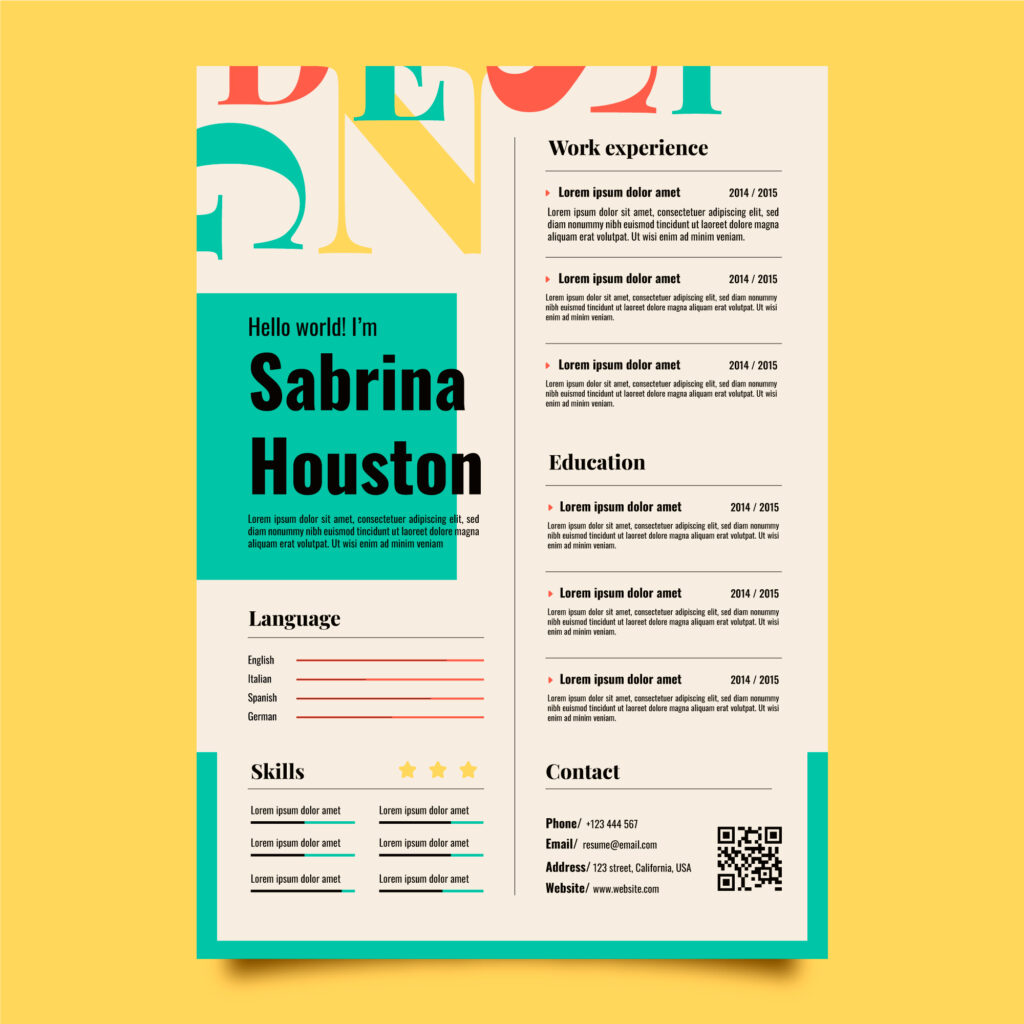
A creative résumé deviates from the standard format by incorporating visual elements, unconventional layouts, and innovative design principles. Some key characteristics of creative résumé include:

  • Visual Appeal: They utilize eye-catching visuals like infographics, illustrations, or color schemes to make a strong first impression.
  • Unconventional Layout: Creative résumé might abandon the traditional chronological or functional format, opting for more visually engaging structures that showcase skills and experience in a unique way.
  • Focus on Storytelling: They often weave a narrative, highlighting the applicant’s career journey and achievements in a compelling way.
  • Alignment with Industry: A key element is ensuring the creative approach complements the target industry and the applicant’s personal brand.

Creative résumé are not for everyone; they require careful consideration to ensure they enhance rather than detract from your qualifications.

When to Use a Creative Résumé

While traditional résumé remain valuable, a creative résumé might be a strategic choice in specific scenarios:

  • Creative Fields: For individuals in design, advertising, marketing, or other creative professions, a creative résumé can showcase their design skills, visual thinking, and ability to communicate effectively through visuals.
  • Freelancers and Independent Contractors: Creative résumé can be a powerful tool for freelancers and independent contractors to showcase their portfolio and unique skillsets.
  • Career Change: If you’re transitioning into a creative field, a creative résumé can help you stand out from the crowd and demonstrate your unconventional approach and passion for the new direction.

However, there are situations where a traditional resume might be a better fit:

  • Conservative Industries: In some fields like law, finance, or accounting, a traditional résumé might be more appropriate, as overly creative elements might be perceived as unprofessional.
  • Entry-Level Positions: For entry-level positions where relevant experience is limited, a traditional résumé with a clear focus on educational background and basic skills might be more suitable.
  • Job Applications with Strict Requirements: If the job posting specifically requests a traditional résumé format, it’s best to adhere to those guidelines.

Understanding these scenarios ensures you choose the resume format that best aligns with your career goals and the specific job you’re targeting.

Examples of How Creative Résumés Are Used in Practice

A creative résumé will typically work best in creative industries. Consider using one in the following (or similar) scenarios:

  • Graphic Designer: A graphic designer can create a visually stunning résumé that showcases their design expertise through infographics, illustrations, and a well-crafted layout that reflects their personal style.
  • Web Developer: A web developer might create a résumé as an interactive website, demonstrating their coding skills and ability to create engaging user experiences.
  • Marketing Professional: A marketing professional can utilize a creative résumé with data visualizations or compelling storytelling elements to showcase their ability to craft effective marketing campaigns.

These examples highlight the diverse ways creative résumé can be used to stand out in creative fields. When you decide to create one, ensure that the creative elements enhance your qualifications and don’t overshadow your experience or relevant skills.

  • facebook
  • instagram
  • linkedin

DON'T MISS ANY SPOT-ON TIPS!

We don't spam! You'll only get emails when we post something awesome.
You can unsubscribe at any time.

Check your inbox or spam folder to confirm your subscription.

©2025 | The Comm Spot | By Newbold Communication & Design