
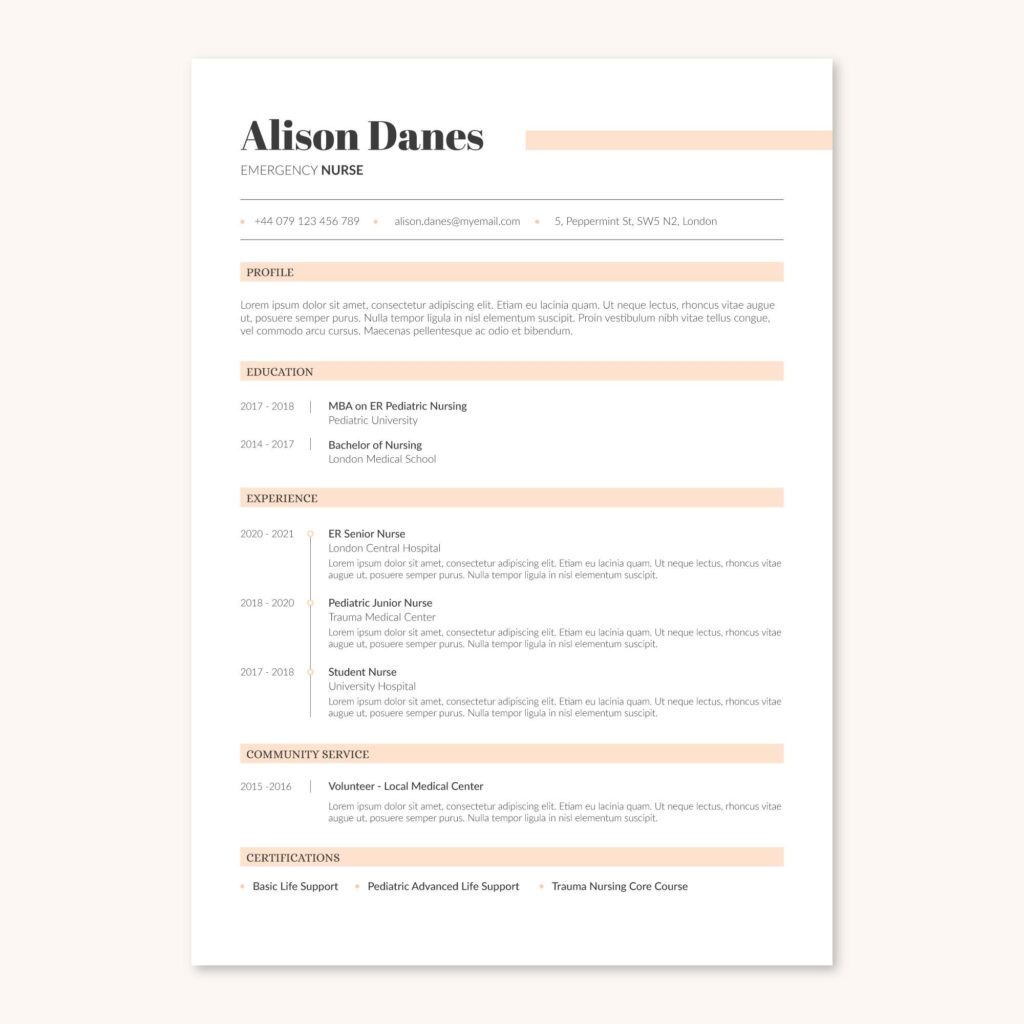
Definition of Chronological Résumé
A chronological résumé is a résumé format that prioritizes your work experience in reverse-chronological order. This means your most recent experience or position appears at the top, followed by previous jobs listed in descending order. The chronological résumé remains one of the most common formats used, especially for professionals applying for entry- and mid-level positions.
Some key characteristics of a chronological résumé include:
- Focus on Work History: This format emphasizes your professional experience, highlighting your career progression, skill development, and accomplishments within each role.
- Detailed Job Descriptions: Each work experience typically includes details such as company name, job title, dates of employment, key responsibilities, and achievements.
- Linear Presentation: The chronological order provides a clear timeline of your professional journey, making it easy for hiring managers to understand your career history.
While seemingly straightforward, effectively crafting a chronological résumé requires careful consideration of content and structure.
When to Use Chronological Résumés
The chronological resume format helps highlight specific aspects of your career for employers:
- Continual and Impressive Work History: If you have been working in continuous jobs and your history shows growth and progression, a chronological résumé can help show that.
- Linear Career Progression: If you have a consistent work history with steady advancement within your field, a chronological résumé showcases your professional growth and expertise effectively.
- Strong Track Record: When you boast a series of impressive achievements within your past roles, a chronological format allows you to detail those successes and demonstrate your value proposition.
- Defined Career Path: If your career path has been focused on a specific industry or skill set, a chronological résumé clearly highlights your relevant experience and expertise.
However, the chronological format might not be the optimal choice for everyone. Here’s when to consider alternatives:
- Career Changes: If you’re transitioning to a new field, a functional résumé might be more effective, emphasizing transferable skills over a non-linear work history.
- Employment Gaps: Significant gaps in your employment timeline could raise questions. A functional résumé can shift the focus to your skills and achievements, minimizing the impact of employment gaps.
- Limited Experience: For recent graduates or individuals with limited work history, a functional résumé can highlight relevant skills and volunteer experiences alongside any formal work placements.
Understanding these considerations ensures you choose the format that best presents your qualifications for the specific job you’re targeting.
*Content on this page was curated and edited by expert humans with the creative assistance of AI.