Skip to content
The Comm Spot The Comm Spot

It's All About Communication

  • HOME
  • ABOUT
    • Meet the Creator: Curtis Newbold, PhD
    • Hire Curtis
    • Publish with Us
    • Contact
    • Privacy Notice
  • COMM-BASICS
    • Glossary
    • Citation & Style Guides
      • AP Style (Journalism)
        • AP Style Overview
        • AP Style Guidelines
        • Media Ethics – SPJ Code of Ethics
        • Elements of Newsworthiness
      • APA Style
        • APA Format – Overview
        • APA - References Guidelines
        • APA - In-text Citations
        • APA - Citing Authors
        • APA - Audiovisual Media
        • APA - Books
        • APA - Digital Sources
        • APA - Events & Interactions
        • APA - Periodicals
        • APA - Print Sources (other than books)
      • Chicago Style
        • Chicago – Overview
        • Chicago - Author-Date System
        • Chicago - Notes-Bibliography System
        • Chicago - In-text Citations
        • Chicago Style - Citing Authors
        • Chicago - Audiovisual Media
        • Chicago - Books
        • Chicago - Digital Sources
        • Chicago - Events and Interactions
        • Chicago - Citing Periodicals
        • Chicago - Print Sources (other than books)
      • MLA Style
        • MLA Overview
        • MLA Works Cited Pages
        • MLA In-text Citations
        • MLA – Authors
        • MLA – Audiovisual Media
        • MLA – Books
        • MLA – Digital Sources
        • MLA – Events & Interactions
        • MLA – Periodicals
        • MLA – Print Sources (other than books)
    • Rhetoric
      • Overview of Rhetoric
      • Rhetorical Appeals (Rhetorical Triangle)
      • Branches of Oratory
      • Canons of Rhetoric
      • Rhetorical Devices
      • Kairos
      • Topos
      • Key Figures in Rhetoric
    • Research Methods
      • Case Studies
      • Competitor Analysis
      • Content Analysis
      • Discourse Analysis
      • Ethnography
      • Focus Groups
      • Observation Research
      • S.W.O.T. Analysis
      • Secondary Research
      • Surveys
      • Target Market Analysis
      • Usability Testing
      • Visual Analysis
    • Theories
    • Thinkers
  • COMM-SUBJECTS
    • Interpersonal Communication
      • Active Listening
      • Body Language
      • Conflict Management
      • Emotional Intelligence
        • Emotional Intelligence Overview
        • Self-Awareness
        • Self-Regulation
        • Motivation
        • Empathy
        • Social Skills
        • Emotional Intelligence Resources
      • Feedback
      • Negotiation
        • Overview of Negotiation
        • Negotiation Skills
        • Negotiation Strategies & Techniques
        • Stages of Negotiation
        • Common Negotiation Scenarios
        • Negotiation Case Studies & Examples
        • Negotiation Tools & Resources
        • Negotiation FAQ
    • Journalism
    • Public Speaking
      • General Guidelines
      • Overcoming Fear
      • Speech Writing and Organization
      • Delivery Techniques
      • Body Language
      • Audience Engagement
      • Storytelling
      • Designing Slides
      • P.O.W.E.R.F.U.L. Presentation Method
    • Strategic Communication
      • Business & Org Comm
        • Definition & History
        • Org Comm Theories
        • Business Documents
        • Change Management
        • Employee Relations
        • Employment Communication
        • Group & Team Communication
        • Leadership Communication
        • Power, Identity, & Ethics at Work
        • Project Management
      • Integrated Marketing Comm
        • Definition of IMC
        • Core Principles of IMC
        • IMC Planning
        • Audience Segmentation
        • Marketing Channels
        • Message Strategies
        • Campaign Measurement & Evaluation
        • Trends & Innovations in IMC
        • Challenges & Pitfalls in IMC
        • Careers & Roles in IMC
      • Public Relations
        • Foundations in PR
        • Strategic Practice
        • Tools & Tactics
        • Research & Analysis
        • Professional Development
      • Case Studies in Strat Comm
    • Technical & Scientific Communication
    • Visual Communication
      • Data Visualization
      • Information Design
      • Photography
      • Web Design
    • Written Communication
      • Writing Process
      • Organizational Methods
        • Five Paragraph Essay
        • Hourglass Method of Writing
        • IMRaD Format (Science)
        • Indirect Method (Bad News)
        • Inverted Pyramid (Journalism)
        • Martini Glass
        • Narrative Format
        • Proposal Format
        • Rogerian Method
        • Toulmin Method
      • Plain Language
        • Audience (Plain Language)
        • Organization (Plain Language)
        • Conversation (Plain Language)
        • Simplicity (Plain Language)
        • Word Choice (Plain Language)
        • Sentence Structure (Plain Language)
        • Design (Plain Language)
      • Punctuation
        • Apostrophes
        • Brackets
        • Colons
        • Commas
        • Ellipses
        • Em Dashes
        • En Dashes
        • Exclamation Marks
        • Hyphens
        • Parentheses
        • Periods
        • Question Marks
        • Quotation Marks
        • Semicolons
      • Style
        • Clarity
        • Conciseness
        • Consistency
        • Editing
        • Flow
        • Rhetorical Devices
        • Sentence Structure
        • Storytelling
        • Tone
        • Voice
        • Word Choice
  • RESOURCES
    • Teaching Resources
      • Assignments & Activities
      • Instructional Design
      • Pedagogies
  • BLOGS
    • The Spotlight Blog
    • Comm Sparks
  • SHOP
    • Cart
    • Checkout
0
The Comm Spot
The Comm Spot

It's All About Communication

Geographic Heat Map

Home >COMM-Subjects >Visual Communication >Data Visualization >Types of Data Visualizations (Charts and Graphs) >Geographic Heat Map

Geographic Heat Map: How to Show Intensity and Concentration Across Space

A geographic heat map is what you use when the story is about intensity, concentration, or hotspots across a location. It shows where something is strongest, weakest, or most concentrated, rather than focusing on exact boundaries or counts.

Instead of asking, “How much is there?”
the question becomes, “Where is it most intense?”


What a Geographic Heat Map Is

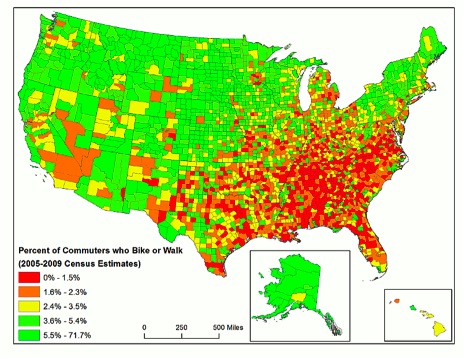
A geographic heat map visualizes data across a map using color gradients. Areas with higher values are shown using warmer or darker colors, while lower values appear cooler or lighter.

Unlike a choropleth map, which fills predefined regions, geographic heat maps often:

  • Smooth values across space
  • Emphasize gradients rather than borders
  • Highlight clusters and hotspots
  • De-emphasize exact administrative boundaries

The result is a map that feels continuous and pattern-focused rather than discrete.


When to Use a Geographic Heat Map

Use a geographic heat map when identifying spatial patterns is more important than reporting exact values.

This map works especially well when the goal is to:

  • Reveal hotspots or cold spots
  • Show intensity or frequency across space
  • Identify clustering or dispersion
  • Support exploratory spatial analysis
  • Communicate risk, demand, or activity levels
  • Help audiences quickly spot patterns

A geographic heat map is most effective when the key question is:
“Where is this most concentrated?”


Types of Data Sets That Work Best for a Geographic Heat Map

Geographic heat maps work best with spatial data that varies continuously or semi-continuously across an area.

Strong candidates include:

  • Crime or incident reports
  • Traffic congestion or movement
  • Disease cases or outbreaks
  • Environmental measurements
  • Social media activity or check-ins
  • Retail demand or service usage

The data should represent intensity, frequency, or likelihood rather than discrete totals per region.


Real-World Examples of a Geographic Heat Map

Geographic heat maps are widely used in journalism, public policy, urban planning, and analytics.

Crime or Incident Hotspots

https://upload.wikimedia.org/wikipedia/commons/e/eb/DChomicides.jpg
https://www.researchgate.net/publication/358417398/figure/fig4/AS%3A1124836466270208%401645193320239/Crime-heatmap-generated-where-deep-intensity-shows-crime-hotspots.jpg
https://www.researchgate.net/publication/350105108/figure/fig3/AS%3A1002186972622849%401615951402693/Heatmap-to-show-concentration-of-incidents-in-an-area-This-figure-is-a-zoomed-version-of.ppm

Reveal areas with higher concentrations of incidents without focusing on exact addresses.


Public Health and Epidemiology

https://www.researchgate.net/publication/340497730/figure/fig2/AS%3A877892389048321%401586317264681/Heat-map-of-the-world-depicting-COVID-19-outbreak.png
https://www.researchgate.net/publication/340930207/figure/fig1/AS%3A885753781432320%401588191566873/Worldwide-heat-map-for-total-COVID-19-cases-by-country-as-of-March-25-2020.ppm
https://www.researchgate.net/publication/358713279/figure/fig2/AS%3A11431281103599262%401669745335134/Geographic-heat-maps-of-the-United-States-visualizing-depression-search-intent-on-A.ppm

Show where cases cluster and how intensity changes across regions.


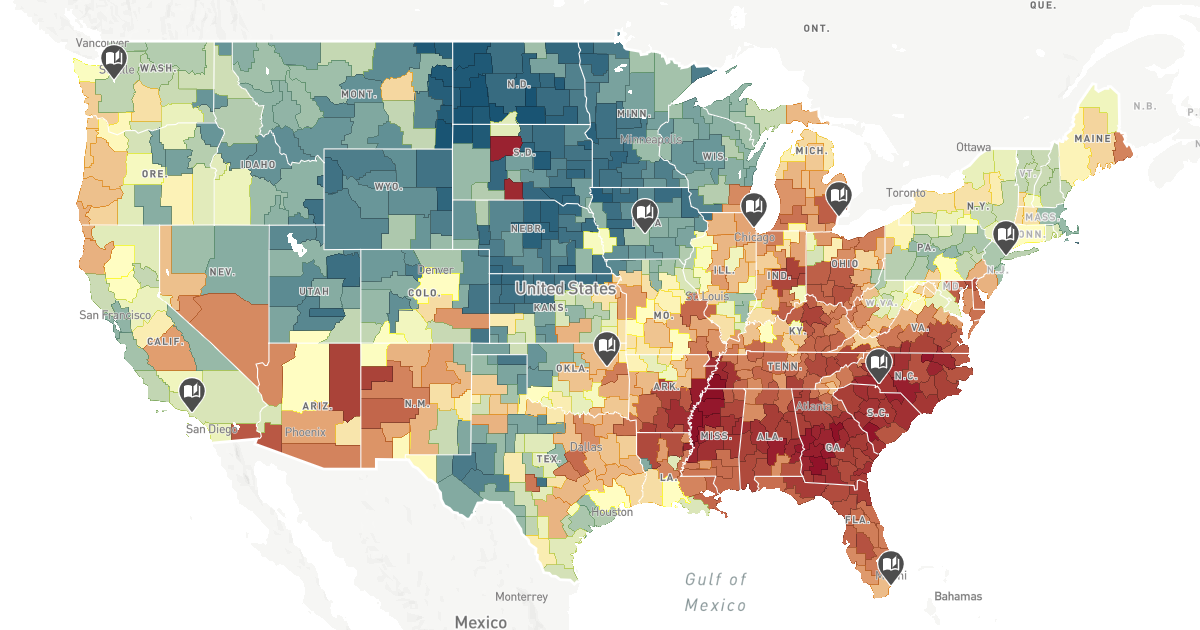
Traffic and Mobility Patterns
https://www.researchgate.net/publication/338252897/figure/fig2/AS%3A842032109060097%401577767507435/Heatmap-of-traffic-congestion-for-the-city-of-Valencia.ppm
https://opportunityatlas.org/public/images/share.png
https://www.planetizen.com/files/map_4.jpg

Highlight congestion, movement patterns, and high-traffic corridors.


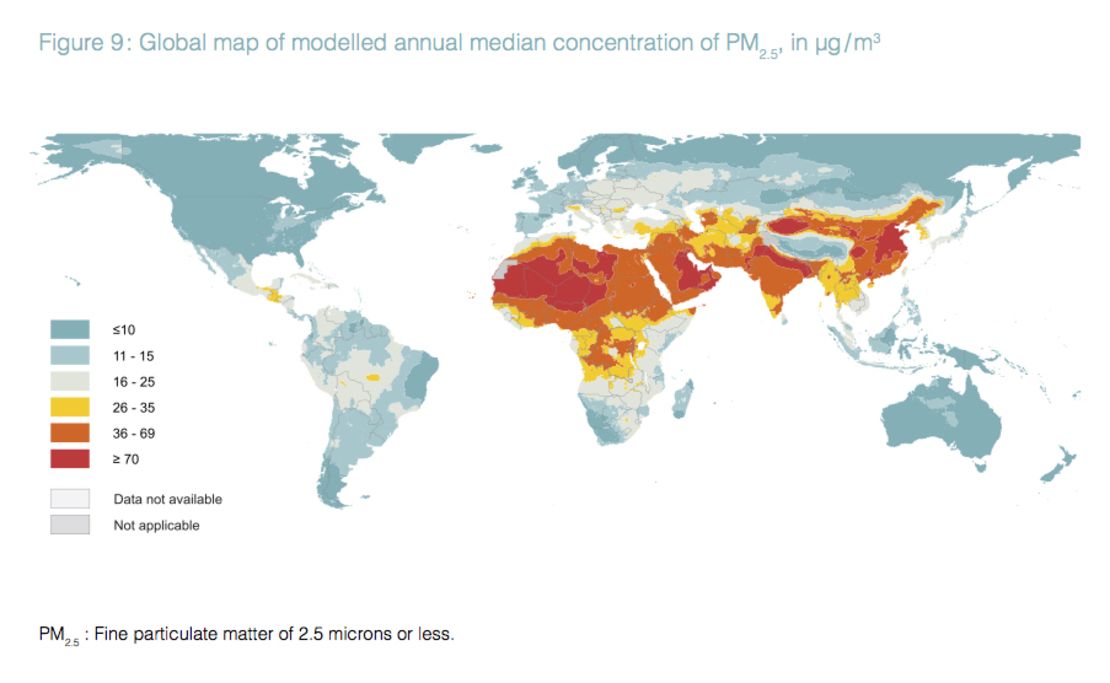
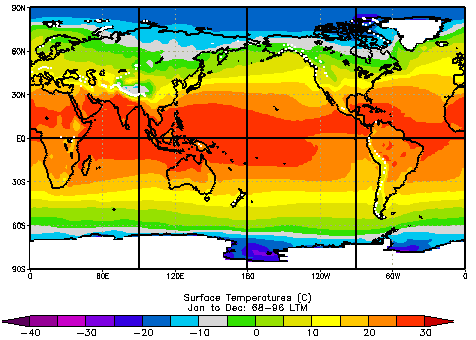
Environmental and Climate Data
https://www2.hawaii.edu/~dennis/GeoBook/chapter_3/annual_temp.gif
https://media.cnn.com/api/v1/images/stellar/prod/160927195715-air-pollution-map-who.jpg?q=w_1110%2Cc_fill

Visualize gradients in temperature, pollution, or environmental risk.


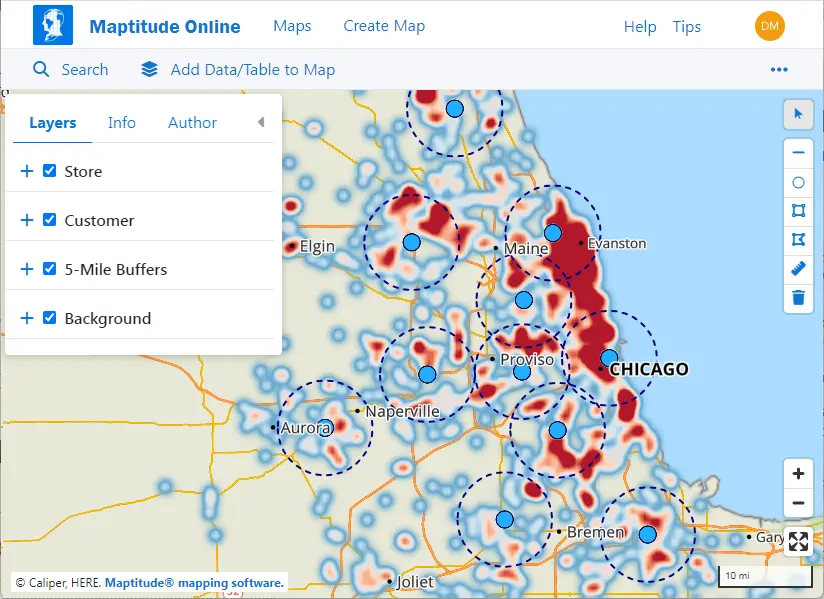
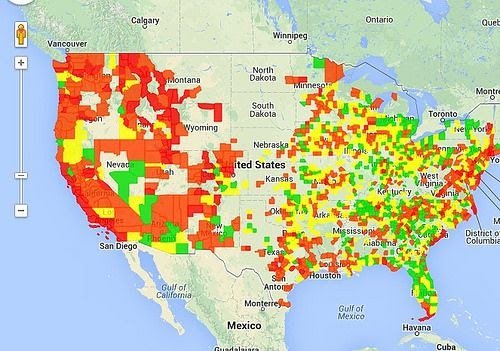
Consumer Behavior or Demand
https://static.wingify.com/gcp/uploads/sites/3/2021/01/Geo-heatmap.jpg
https://cdn.informaconnect.com/platform/files/public/cspdn/main/articles/heat-map-300.png
https://www.caliper.com/graphics/heat-map-maptitude-online-example.webp

Show where demand, engagement, or activity is strongest across a region.


What to Avoid or Be Careful Of with a Geographic Heat Map

❌ Don’t treat it as precise
Heat maps show patterns, not exact counts or boundaries. Precision should come from supporting data.

❌ Don’t over-smooth the data
Too much smoothing can erase meaningful local variation and create misleading patterns.

❌ Don’t ignore the color scale
Color choices strongly influence interpretation. Scales should be intuitive and clearly labeled.

❌ Don’t hide context
Without basemaps, legends, or annotations, viewers may misinterpret what they’re seeing.

❌ Don’t use it when rates matter more than intensity
If per-capita comparisons are the goal, a choropleth map may be more appropriate.


*Content on this page was curated and edited by expert humans with the creative assistance of AI.

  • facebook
  • instagram
  • linkedin

DON'T MISS ANY SPOT-ON TIPS!

We don't spam! You'll only get emails when we post something awesome.
You can unsubscribe at any time.

Check your inbox or spam folder to confirm your subscription.

©2025 | The Comm Spot | By Newbold Communication & Design