
Skip to content
The Comm Spot The Comm Spot

It's All About Communication

  • HOME
  • ABOUT
    • Meet the Creator: Curtis Newbold, PhD
    • Hire Curtis
    • Publish with Us
    • Contact
    • Privacy Notice
  • COMM-BASICS
    • Glossary
    • Citation & Style Guides
      • AP Style (Journalism)
        • AP Style Overview
        • AP Style Guidelines
        • Media Ethics – SPJ Code of Ethics
        • Elements of Newsworthiness
      • APA Style
        • APA Format – Overview
        • APA - References Guidelines
        • APA - In-text Citations
        • APA - Citing Authors
        • APA - Audiovisual Media
        • APA - Books
        • APA - Digital Sources
        • APA - Events & Interactions
        • APA - Periodicals
        • APA - Print Sources (other than books)
      • Chicago Style
        • Chicago – Overview
        • Chicago - Author-Date System
        • Chicago - Notes-Bibliography System
        • Chicago - In-text Citations
        • Chicago Style - Citing Authors
        • Chicago - Audiovisual Media
        • Chicago - Books
        • Chicago - Digital Sources
        • Chicago - Events and Interactions
        • Chicago - Citing Periodicals
        • Chicago - Print Sources (other than books)
      • MLA Style
        • MLA Overview
        • MLA Works Cited Pages
        • MLA In-text Citations
        • MLA – Authors
        • MLA – Audiovisual Media
        • MLA – Books
        • MLA – Digital Sources
        • MLA – Events & Interactions
        • MLA – Periodicals
        • MLA – Print Sources (other than books)
    • Rhetoric
      • Overview of Rhetoric
      • Rhetorical Appeals (Rhetorical Triangle)
      • Branches of Oratory
      • Canons of Rhetoric
      • Rhetorical Devices
      • Kairos
      • Topos
      • Key Figures in Rhetoric
    • Research Methods
      • Case Studies
      • Competitor Analysis
      • Content Analysis
      • Discourse Analysis
      • Ethnography
      • Focus Groups
      • Observation Research
      • S.W.O.T. Analysis
      • Secondary Research
      • Surveys
      • Target Market Analysis
      • Usability Testing
      • Visual Analysis
    • Theories
    • Thinkers
  • COMM-SUBJECTS
    • Interpersonal Communication
      • Active Listening
      • Body Language
      • Conflict Management
      • Emotional Intelligence
        • Emotional Intelligence Overview
        • Self-Awareness
        • Self-Regulation
        • Motivation
        • Empathy
        • Social Skills
        • Emotional Intelligence Resources
      • Feedback
      • Negotiation
        • Overview of Negotiation
        • Negotiation Skills
        • Negotiation Strategies & Techniques
        • Stages of Negotiation
        • Common Negotiation Scenarios
        • Negotiation Case Studies & Examples
        • Negotiation Tools & Resources
        • Negotiation FAQ
    • Journalism
    • Public Speaking
      • General Guidelines
      • Overcoming Fear
      • Speech Writing and Organization
      • Delivery Techniques
      • Body Language
      • Audience Engagement
      • Storytelling
      • Designing Slides
      • P.O.W.E.R.F.U.L. Presentation Method
    • Strategic Communication
      • Business & Org Comm
        • Definition & History
        • Org Comm Theories
        • Business Documents
        • Change Management
        • Employee Relations
        • Employment Communication
        • Group & Team Communication
        • Leadership Communication
        • Power, Identity, & Ethics at Work
        • Project Management
      • Integrated Marketing Comm
        • Definition of IMC
        • Core Principles of IMC
        • IMC Planning
        • Audience Segmentation
        • Marketing Channels
        • Message Strategies
        • Campaign Measurement & Evaluation
        • Trends & Innovations in IMC
        • Challenges & Pitfalls in IMC
        • Careers & Roles in IMC
      • Public Relations
        • Foundations in PR
        • Strategic Practice
        • Tools & Tactics
        • Research & Analysis
        • Professional Development
      • Case Studies in Strat Comm
    • Technical & Scientific Communication
    • Visual Communication
      • Data Visualization
      • Information Design
      • Photography
      • Web Design
    • Written Communication
      • Writing Process
      • Organizational Methods
        • Five Paragraph Essay
        • Hourglass Method of Writing
        • IMRaD Format (Science)
        • Indirect Method (Bad News)
        • Inverted Pyramid (Journalism)
        • Martini Glass
        • Narrative Format
        • Proposal Format
        • Rogerian Method
        • Toulmin Method
      • Plain Language
        • Audience (Plain Language)
        • Organization (Plain Language)
        • Conversation (Plain Language)
        • Simplicity (Plain Language)
        • Word Choice (Plain Language)
        • Sentence Structure (Plain Language)
        • Design (Plain Language)
      • Punctuation
        • Apostrophes
        • Brackets
        • Colons
        • Commas
        • Ellipses
        • Em Dashes
        • En Dashes
        • Exclamation Marks
        • Hyphens
        • Parentheses
        • Periods
        • Question Marks
        • Quotation Marks
        • Semicolons
      • Style
        • Clarity
        • Conciseness
        • Consistency
        • Editing
        • Flow
        • Rhetorical Devices
        • Sentence Structure
        • Storytelling
        • Tone
        • Voice
        • Word Choice
  • RESOURCES
    • Teaching Resources
      • Assignments & Activities
      • Instructional Design
      • Pedagogies
  • BLOGS
    • The Spotlight Blog
    • Comm Sparks
  • SHOP
    • Cart
    • Checkout
0
The Comm Spot
The Comm Spot

It's All About Communication

Public Relations Case Study: Occupy Wall Street Movement (2011)

Home >COMM-Subjects >Strategic Communication >Case Studies in Strategic Communication >Public Relations Case Study: Occupy Wall Street Movement (2011)

Overview

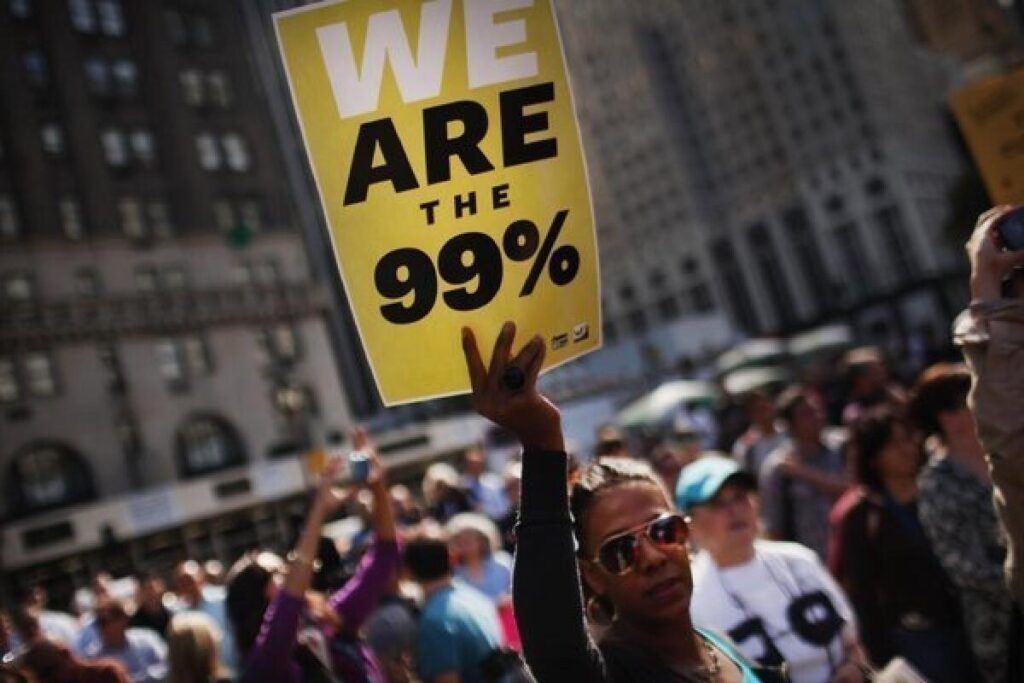
The Occupy Wall Street (OWS) movement began in New York City in September 2011 as a protest against economic inequality, corporate greed, and the influence of money in politics. Using the rallying cry “We are the 99%”, the movement quickly spread to cities worldwide, symbolizing frustration with widening wealth gaps after the 2008 financial crisis. While it lacked centralized leadership and specific policy goals, OWS reshaped public discourse around inequality and remains a defining example of decentralized, grassroots activism in the digital age.


Context and Events

In the wake of the 2008 financial collapse, public frustration grew over bailouts for major banks while ordinary citizens faced unemployment, foreclosures, and stagnant wages. Inspired by uprisings like the Arab Spring, Canadian activist group Adbusters issued a call to “Occupy Wall Street” in September 2011.

Key events included:

  • Zuccotti Park occupation (NYC): Protesters set up an encampment near Wall Street, creating a physical hub for demonstrations, assemblies, and media coverage.
  • Expansion worldwide: The protest model spread quickly, with occupations in cities across the U.S., Europe, and beyond.
  • Slogan “We are the 99%”: A simple, viral phrase symbolizing the divide between the wealthy elite (1%) and the rest of society.
  • Clashes with police: High-profile confrontations and evictions of protest camps drew national media attention.
  • Public assemblies: OWS promoted horizontal decision-making through general assemblies, reinforcing its ethos of decentralized, participatory democracy.

Although most camps were dismantled by late 2011, the movement’s symbolic and rhetorical impact persisted.


Communication Strategy

OWS relied on grassroots organizing and digital amplification:

  • Simple, resonant framing: “We are the 99%” distilled complex issues of inequality into a universally relatable slogan.
  • Physical presence: Occupying public space (Zuccotti Park) created a visible, symbolic center for the movement.
  • Decentralized structure: Leaderless organization encouraged inclusivity but limited coordination on goals.
  • Viral media and livestreaming: Social media, livestreams, and independent journalists bypassed mainstream media filters, spreading imagery of protests and police crackdowns.
  • Symbolic acts: Marches, signs, and encampments became visual metaphors for inequality and resistance.

Outcomes

OWS achieved significant cultural and rhetorical influence despite limited policy wins:

  • Mainstreaming inequality discourse: Terms like “the 1%” and “the 99%” entered global political language and remain shorthand for inequality.
  • Political ripple effects: The movement influenced later progressive campaigns, including Bernie Sanders’ presidential bids and debates about wealth taxes, student debt, and corporate regulation.
  • Limitations: Without concrete policy proposals or centralized leadership, OWS struggled to translate energy into legislative change.
  • Global solidarity: OWS inspired related movements worldwide, from anti-austerity protests in Europe to grassroots activism in Latin America.

Although the physical occupations ended, OWS left a lasting legacy in reshaping how people think and talk about inequality.


Lessons Learned

  1. Framing is powerful – “We are the 99%” became one of the most effective activist slogans of the 21st century.
  2. Symbolism sustains visibility – Occupying space created a tangible, media-friendly metaphor for economic exclusion.
  3. Decentralization is both strength and weakness – Leaderless models encourage participation but hinder strategic follow-through.
  4. Digital tools amplify grassroots power – Livestreaming and social media allowed OWS to bypass traditional gatekeepers.
  5. Narrative change precedes policy change – OWS did not achieve direct reforms but shifted the public agenda, influencing later movements and politics.

*Content on this page was curated and edited by expert humans with the creative assistance of AI.

  • facebook
  • instagram
  • linkedin

DON'T MISS ANY SPOT-ON TIPS!

We don't spam! You'll only get emails when we post something awesome.
You can unsubscribe at any time.

Check your inbox or spam folder to confirm your subscription.

©2025 | The Comm Spot | By Newbold Communication & Design