
Overview
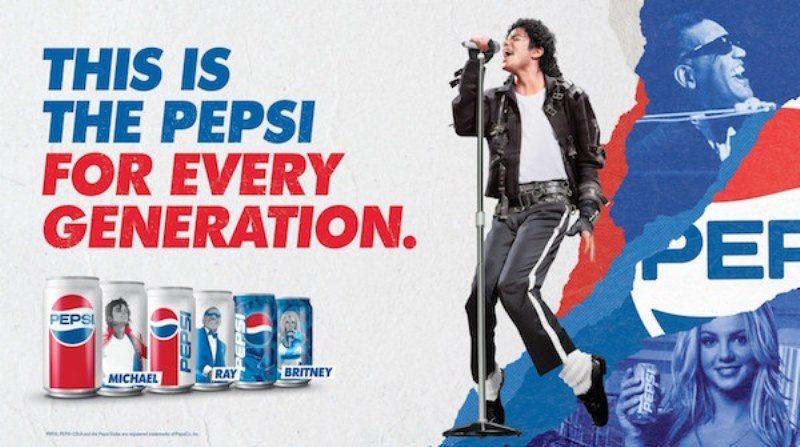
Pepsi’s “The Choice of a New Generation” campaign, launched in 1984, was one of the most influential advertising efforts of the 1980s, helping Pepsi reposition itself as the youthful, trend-setting alternative to Coca-Cola. Featuring pop culture icons like Michael Jackson, the campaign blended celebrity endorsements, music, and lifestyle marketing to connect with younger consumers. It epitomized the shift from product-focused advertising to brand identity as lifestyle, marking Pepsi as a cultural challenger in the cola wars.
Context and Events
By the early 1980s, Pepsi had long trailed Coca-Cola in global sales, despite making inroads with the “Pepsi Challenge” blind taste test ads of the 1970s. To maintain momentum, Pepsi needed to evolve from product-based comparisons to a cultural identity strategy.
In 1984, Pepsi launched “The Choice of a New Generation,” a campaign that paired Pepsi with youth culture, music, and celebrities. Its most famous execution was the Michael Jackson commercial, which remixed “Billie Jean” into a Pepsi jingle and featured Jackson and a crowd of kids dancing in the streets. The campaign later expanded to include other icons like Lionel Richie, Madonna, and Michael J. Fox, making Pepsi synonymous with pop culture.
The campaign ran throughout the 1980s and early 1990s, positioning Pepsi as the “cool” alternative to Coca-Cola’s traditionalism.
Communication Strategy
The campaign succeeded by shifting from product to lifestyle marketing:
- Celebrity power: Aligning with Michael Jackson, then the biggest pop star in the world, gave Pepsi immediate cultural credibility.
- Music and entertainment integration: By using pop songs, concerts, and MTV-inspired visuals, Pepsi embedded itself into youth entertainment.
- Youth positioning: Ads emphasized energy, fun, and rebellion, contrasting Coke’s image as a classic, family-friendly brand.
- Consistency across media: TV spots, print ads, billboards, and concert sponsorships reinforced the same identity.
- Challenger narrative: Pepsi leaned into being the “choice of the new generation,” positioning itself as fresh, exciting, and forward-looking.
Outcomes
The campaign delivered both cultural and commercial success:
- Market share gains: Pepsi closed the gap with Coca-Cola, surpassing it in supermarket sales by the mid-1980s in the U.S.
- Cultural dominance: Michael Jackson’s Pepsi ads became iconic, and the brand’s association with music and youth culture stuck.
- Global expansion: Pepsi replicated the formula internationally, tying its identity to young consumers worldwide.
- Coca-Cola misstep: Coke’s response, “New Coke” (1985), backfired and gave Pepsi further momentum in the cola wars.
- Legacy: The campaign established Pepsi’s long-term positioning as the “youth brand,” influencing later campaigns like “Generation Next” in the 1990s.
Lessons Learned
- Lifestyle branding creates emotional connection – Pepsi sold culture and identity, not just cola.
- Celebrity endorsements amplify reach – Michael Jackson and other stars turned ads into cultural events.
- Challenger brands can outmaneuver leaders – By focusing on youth and energy, Pepsi differentiated itself from Coke’s heritage positioning.
- Cultural timing matters – Launching during the rise of MTV and global pop stars made Pepsi feel contemporary and relevant.
- Long-term positioning builds legacy – “The Choice of a New Generation” cemented Pepsi’s brand identity for decades.
*Content on this page was curated and edited by expert humans with the creative assistance of AI.