
Skip to content
The Comm Spot The Comm Spot

It's All About Communication

  • HOME
  • ABOUT
    • Meet the Creator: Curtis Newbold, PhD
    • Hire Curtis
    • Publish with Us
    • Contact
    • Privacy Notice
  • COMM-BASICS
    • Glossary
    • Citation & Style Guides
      • AP Style (Journalism)
        • AP Style Overview
        • AP Style Guidelines
        • Media Ethics – SPJ Code of Ethics
        • Elements of Newsworthiness
      • APA Style
        • APA Format – Overview
        • APA - References Guidelines
        • APA - In-text Citations
        • APA - Citing Authors
        • APA - Audiovisual Media
        • APA - Books
        • APA - Digital Sources
        • APA - Events & Interactions
        • APA - Periodicals
        • APA - Print Sources (other than books)
      • Chicago Style
        • Chicago – Overview
        • Chicago - Author-Date System
        • Chicago - Notes-Bibliography System
        • Chicago - In-text Citations
        • Chicago Style - Citing Authors
        • Chicago - Audiovisual Media
        • Chicago - Books
        • Chicago - Digital Sources
        • Chicago - Events and Interactions
        • Chicago - Citing Periodicals
        • Chicago - Print Sources (other than books)
      • MLA Style
        • MLA Overview
        • MLA Works Cited Pages
        • MLA In-text Citations
        • MLA – Authors
        • MLA – Audiovisual Media
        • MLA – Books
        • MLA – Digital Sources
        • MLA – Events & Interactions
        • MLA – Periodicals
        • MLA – Print Sources (other than books)
    • Rhetoric
      • Overview of Rhetoric
      • Rhetorical Appeals (Rhetorical Triangle)
      • Branches of Oratory
      • Canons of Rhetoric
      • Rhetorical Devices
      • Kairos
      • Topos
      • Key Figures in Rhetoric
    • Research Methods
      • Case Studies
      • Competitor Analysis
      • Content Analysis
      • Discourse Analysis
      • Ethnography
      • Focus Groups
      • Observation Research
      • S.W.O.T. Analysis
      • Secondary Research
      • Surveys
      • Target Market Analysis
      • Usability Testing
      • Visual Analysis
    • Theories
    • Thinkers
  • COMM-SUBJECTS
    • Interpersonal Communication
      • Active Listening
      • Body Language
      • Conflict Management
      • Emotional Intelligence
        • Emotional Intelligence Overview
        • Self-Awareness
        • Self-Regulation
        • Motivation
        • Empathy
        • Social Skills
        • Emotional Intelligence Resources
      • Feedback
      • Negotiation
        • Overview of Negotiation
        • Negotiation Skills
        • Negotiation Strategies & Techniques
        • Stages of Negotiation
        • Common Negotiation Scenarios
        • Negotiation Case Studies & Examples
        • Negotiation Tools & Resources
        • Negotiation FAQ
    • Journalism
    • Public Speaking
      • General Guidelines
      • Overcoming Fear
      • Speech Writing and Organization
      • Delivery Techniques
      • Body Language
      • Audience Engagement
      • Storytelling
      • Designing Slides
      • P.O.W.E.R.F.U.L. Presentation Method
    • Strategic Communication
      • Business & Org Comm
        • Definition & History
        • Org Comm Theories
        • Business Documents
        • Change Management
        • Employee Relations
        • Employment Communication
        • Group & Team Communication
        • Leadership Communication
        • Power, Identity, & Ethics at Work
        • Project Management
      • Integrated Marketing Comm
        • Definition of IMC
        • Core Principles of IMC
        • IMC Planning
        • Audience Segmentation
        • Marketing Channels
        • Message Strategies
        • Campaign Measurement & Evaluation
        • Trends & Innovations in IMC
        • Challenges & Pitfalls in IMC
        • Careers & Roles in IMC
      • Public Relations
        • Foundations in PR
        • Strategic Practice
        • Tools & Tactics
        • Research & Analysis
        • Professional Development
      • Case Studies in Strat Comm
    • Technical & Scientific Communication
    • Visual Communication
      • Data Visualization
      • Information Design
      • Photography
      • Web Design
    • Written Communication
      • Writing Process
      • Organizational Methods
        • Five Paragraph Essay
        • Hourglass Method of Writing
        • IMRaD Format (Science)
        • Indirect Method (Bad News)
        • Inverted Pyramid (Journalism)
        • Martini Glass
        • Narrative Format
        • Proposal Format
        • Rogerian Method
        • Toulmin Method
      • Plain Language
        • Audience (Plain Language)
        • Organization (Plain Language)
        • Conversation (Plain Language)
        • Simplicity (Plain Language)
        • Word Choice (Plain Language)
        • Sentence Structure (Plain Language)
        • Design (Plain Language)
      • Punctuation
        • Apostrophes
        • Brackets
        • Colons
        • Commas
        • Ellipses
        • Em Dashes
        • En Dashes
        • Exclamation Marks
        • Hyphens
        • Parentheses
        • Periods
        • Question Marks
        • Quotation Marks
        • Semicolons
      • Style
        • Clarity
        • Conciseness
        • Consistency
        • Editing
        • Flow
        • Rhetorical Devices
        • Sentence Structure
        • Storytelling
        • Tone
        • Voice
        • Word Choice
  • RESOURCES
    • Teaching Resources
      • Assignments & Activities
      • Instructional Design
      • Pedagogies
  • BLOGS
    • The Spotlight Blog
    • Comm Sparks
  • SHOP
    • Cart
    • Checkout
0
The Comm Spot
The Comm Spot

It's All About Communication

Marketing & Advertising Case Study: Absolut Vodka Print Campaign (1980 – 2000s)

Home >COMM-Subjects >Strategic Communication >Case Studies in Strategic Communication >Marketing & Advertising Case Study: Absolut Vodka Print Campaign (1980 – 2000s)

Overview

The Absolut Vodka print campaign, which ran from 1980 through the early 2000s, is one of the longest-running and most successful advertising campaigns in history. Built around the distinctive shape of the Absolut bottle, the campaign used clever wordplay, minimalist visuals, and artistic collaborations to transform a relatively unknown Swedish vodka into a global icon. With over 1,500 unique ads, the campaign became a masterclass in brand consistency and creative variation.

Context and Events

In the late 1970s, Absolut Vodka was virtually unknown outside Sweden, struggling to gain traction in the U.S. market against established competitors like Smirnoff. The brand’s clear bottle and minimalist design offered little to differentiate it on crowded liquor shelves.

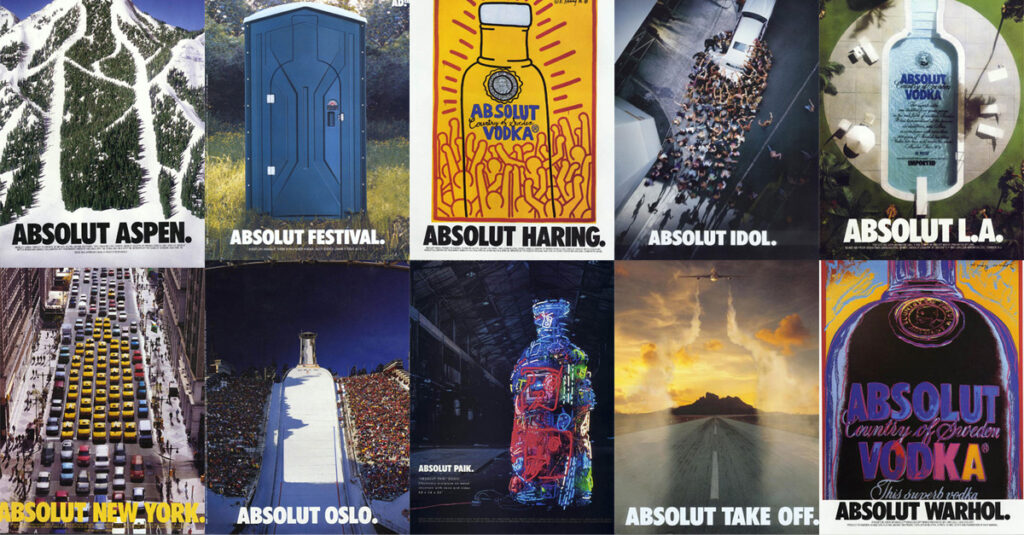
In 1980, ad agency TBWA introduced the now-famous “Absolut Perfection” print ad: a simple image of the bottle with a halo above it. The ad marked the beginning of a decades-long series in which Absolut reimagined the bottle in countless creative ways. Examples included:

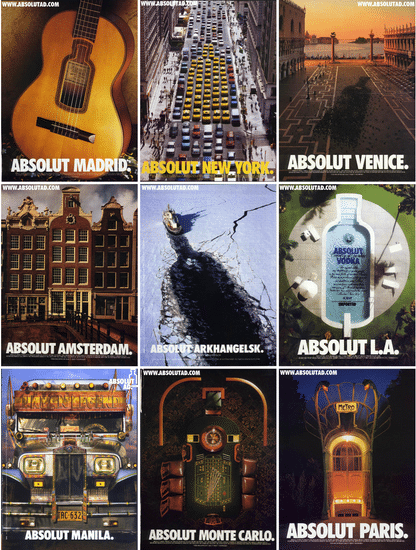
  • Absolut New York – bottle silhouette formed by city lights.
  • Absolut Warhol (1986) – Andy Warhol painted the Absolut bottle, leading to collaborations with hundreds of artists.
  • Absolut L.A., Absolut Rio, Absolut London – bottle designs themed to cities worldwide.

The ads appeared in magazines, billboards, and later digital formats, maintaining a consistent structure while endlessly reinventing the bottle’s context.


Communication Strategy

The campaign succeeded by making the product itself the hero through consistent yet creative storytelling:

  • Consistency in structure: Every ad featured the Absolut bottle shape, the word “Absolut,” and a witty descriptor.
  • Minimalism: Clean, uncluttered visuals emphasized the product while sparking curiosity.
  • Clever wordplay: Puns and cultural references made the ads both sophisticated and approachable.
  • Cultural integration: Partnerships with artists like Warhol positioned Absolut as an art-world patron, elevating its cultural cachet.
  • Global adaptability: Ads tailored to cities and countries made the brand feel both international and locally relevant.

Outcomes

The Absolut campaign transformed the brand’s fortunes:

  • Market dominance: Absolut became the top imported vodka in the U.S., holding that position for over 25 years.
  • Cultural status: The bottle became a pop culture icon, instantly recognizable even without words.
  • Longevity: Running for more than two decades with over 1,500 executions, the campaign remains one of the longest continuous brand campaigns ever.
  • Artistic influence: Absolut blurred the line between advertising and art, pioneering brand collaborations with creatives.
  • Sales growth: Absolut grew from selling around 10,000 cases annually in 1980 to over 4.5 million by 2000.

Lessons Learned

  1. Consistency builds recognition – Repetition of a single visual motif (the bottle) cemented brand identity.
  2. Creativity thrives within structure – The fixed template allowed endless variation without losing brand coherence.
  3. Cultural partnerships elevate brands – Collaborations with artists created cultural prestige beyond traditional advertising.
  4. Global-local balance matters – Tailoring ads to cities and countries made Absolut feel cosmopolitan yet personal.
  5. Longevity is possible with reinvention – A simple concept sustained decades of relevance through continuous creativity.

*Content on this page was curated and edited by expert humans with the creative assistance of AI.

  • facebook
  • instagram
  • linkedin

DON'T MISS ANY SPOT-ON TIPS!

We don't spam! You'll only get emails when we post something awesome.
You can unsubscribe at any time.

Check your inbox or spam folder to confirm your subscription.

©2025 | The Comm Spot | By Newbold Communication & Design