Skip to content
The Comm Spot The Comm Spot

It's All About Communication

  • HOME
  • ABOUT
    • Meet the Creator: Curtis Newbold, PhD
    • Hire Curtis
    • Publish with Us
    • Contact
    • Privacy Notice
  • COMM-BASICS
    • Glossary
    • Citation & Style Guides
      • AP Style (Journalism)
        • AP Style Overview
        • AP Style Guidelines
        • Media Ethics – SPJ Code of Ethics
        • Elements of Newsworthiness
      • APA Style
        • APA Format – Overview
        • APA - References Guidelines
        • APA - In-text Citations
        • APA - Citing Authors
        • APA - Audiovisual Media
        • APA - Books
        • APA - Digital Sources
        • APA - Events & Interactions
        • APA - Periodicals
        • APA - Print Sources (other than books)
      • Chicago Style
        • Chicago – Overview
        • Chicago - Author-Date System
        • Chicago - Notes-Bibliography System
        • Chicago - In-text Citations
        • Chicago Style - Citing Authors
        • Chicago - Audiovisual Media
        • Chicago - Books
        • Chicago - Digital Sources
        • Chicago - Events and Interactions
        • Chicago - Citing Periodicals
        • Chicago - Print Sources (other than books)
      • MLA Style
        • MLA Overview
        • MLA Works Cited Pages
        • MLA In-text Citations
        • MLA – Authors
        • MLA – Audiovisual Media
        • MLA – Books
        • MLA – Digital Sources
        • MLA – Events & Interactions
        • MLA – Periodicals
        • MLA – Print Sources (other than books)
    • Rhetoric
      • Overview of Rhetoric
      • Rhetorical Appeals (Rhetorical Triangle)
      • Branches of Oratory
      • Canons of Rhetoric
      • Rhetorical Devices
      • Kairos
      • Topos
      • Key Figures in Rhetoric
    • Research Methods
      • Case Studies
      • Competitor Analysis
      • Content Analysis
      • Discourse Analysis
      • Ethnography
      • Focus Groups
      • Observation Research
      • S.W.O.T. Analysis
      • Secondary Research
      • Surveys
      • Target Market Analysis
      • Usability Testing
      • Visual Analysis
    • Theories
    • Thinkers
  • COMM-SUBJECTS
    • Interpersonal Communication
      • Active Listening
      • Body Language
      • Conflict Management
      • Emotional Intelligence
        • Emotional Intelligence Overview
        • Self-Awareness
        • Self-Regulation
        • Motivation
        • Empathy
        • Social Skills
        • Emotional Intelligence Resources
      • Feedback
      • Negotiation
        • Overview of Negotiation
        • Negotiation Skills
        • Negotiation Strategies & Techniques
        • Stages of Negotiation
        • Common Negotiation Scenarios
        • Negotiation Case Studies & Examples
        • Negotiation Tools & Resources
        • Negotiation FAQ
    • Journalism
    • Public Speaking
      • General Guidelines
      • Overcoming Fear
      • Speech Writing and Organization
      • Delivery Techniques
      • Body Language
      • Audience Engagement
      • Storytelling
      • Designing Slides
      • P.O.W.E.R.F.U.L. Presentation Method
    • Strategic Communication
      • Business & Org Comm
        • Definition & History
        • Org Comm Theories
        • Business Documents
        • Change Management
        • Employee Relations
        • Employment Communication
        • Group & Team Communication
        • Leadership Communication
        • Power, Identity, & Ethics at Work
        • Project Management
      • Integrated Marketing Comm
        • Definition of IMC
        • Core Principles of IMC
        • IMC Planning
        • Audience Segmentation
        • Marketing Channels
        • Message Strategies
        • Campaign Measurement & Evaluation
        • Trends & Innovations in IMC
        • Challenges & Pitfalls in IMC
        • Careers & Roles in IMC
      • Public Relations
        • Foundations in PR
        • Strategic Practice
        • Tools & Tactics
        • Research & Analysis
        • Professional Development
      • Case Studies in Strat Comm
    • Technical & Scientific Communication
    • Visual Communication
      • Data Visualization
      • Information Design
      • Photography
      • Web Design
    • Written Communication
      • Writing Process
      • Organizational Methods
        • Five Paragraph Essay
        • Hourglass Method of Writing
        • IMRaD Format (Science)
        • Indirect Method (Bad News)
        • Inverted Pyramid (Journalism)
        • Martini Glass
        • Narrative Format
        • Proposal Format
        • Rogerian Method
        • Toulmin Method
      • Plain Language
        • Audience (Plain Language)
        • Organization (Plain Language)
        • Conversation (Plain Language)
        • Simplicity (Plain Language)
        • Word Choice (Plain Language)
        • Sentence Structure (Plain Language)
        • Design (Plain Language)
      • Punctuation
        • Apostrophes
        • Brackets
        • Colons
        • Commas
        • Ellipses
        • Em Dashes
        • En Dashes
        • Exclamation Marks
        • Hyphens
        • Parentheses
        • Periods
        • Question Marks
        • Quotation Marks
        • Semicolons
      • Style
        • Clarity
        • Conciseness
        • Consistency
        • Editing
        • Flow
        • Rhetorical Devices
        • Sentence Structure
        • Storytelling
        • Tone
        • Voice
        • Word Choice
  • RESOURCES
    • Teaching Resources
      • Assignments & Activities
      • Instructional Design
      • Pedagogies
  • BLOGS
    • The Spotlight Blog
    • Comm Sparks
  • SHOP
    • Cart
    • Checkout
0
The Comm Spot
The Comm Spot

It's All About Communication

Crisis Management Case Study: United Airlines “Passenger Dragging” Crisis (2017)

Home >COMM-Subjects >Strategic Communication >Case Studies in Strategic Communication >Crisis Management Case Study: United Airlines “Passenger Dragging” Crisis (2017)

Overview

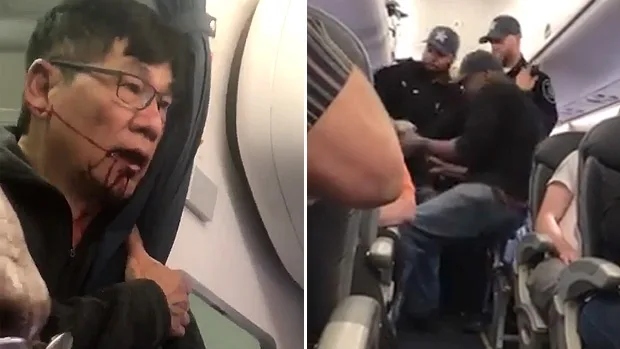
In April 2017, United Airlines became the center of a global public relations disaster after a passenger, Dr. David Dao, was forcibly removed from an overbooked flight. Video of the incident, showing security officers dragging Dao bloodied and screaming from his seat, went viral within hours, sparking outrage worldwide. The airline’s poor initial response, coupled with the shocking visuals, turned a routine operational issue into a textbook example of how not to handle a crisis in the digital age.


Context and Events

On April 9, 2017, United Express Flight 3411 from Chicago to Louisville was overbooked, a common airline practice. When no passengers volunteered to give up their seats, United selected four at random to be removed so crew members could board. Dr. Dao, a paying passenger, refused to leave, citing his need to see patients the next morning. Chicago Aviation Department security officers were called, and in the ensuing struggle, Dao was forcibly dragged down the aisle.

Multiple passengers filmed the incident on smartphones, and the videos spread instantly across social media platforms. Within hours, hashtags like #BoycottUnited were trending worldwide. The story dominated global news cycles, portraying United as callous and indifferent to customers.


Communication Strategy

United’s crisis response was widely criticized for its mishandling at every stage:

  • Initial tone-deaf statement: CEO Oscar Munoz issued an internal email calling Dao “disruptive and belligerent,” which leaked to the press and inflamed outrage. The statement focused on corporate procedure and employee authority rather than customer dignity or safety.
  • Slow and defensive public apology: United’s first public apology expressed regret for “re-accommodating” passengers, a euphemism that was mocked as corporate doublespeak. The lack of empathy made the brand appear detached and arrogant.
  • Delayed executive visibility: Munoz did not immediately appear publicly to take responsibility, missing an early opportunity to humanize the company’s response.
  • Eventually revised strategy: Under mounting public pressure, United shifted tone. Munoz issued a stronger apology, met with Dr. Dao, promised reforms, and announced changes to overbooking and customer handling policies.
  • Policy adjustments: United pledged to limit the use of law enforcement in seating disputes, offer higher compensation for volunteers, and ensure crew members are booked in advance to avoid similar situations.

Outcomes

The reputational fallout was immense. United’s stock price initially dropped by nearly $1 billion in market value. Surveys showed plummeting customer satisfaction and brand perception, particularly in China, where the story was amplified by cultural sensitivities around respect and dignity.

Although United implemented policy reforms and settled with Dr. Dao out of court, the damage to its image lingered for years. The incident became a symbol of corporate insensitivity and the risks of failing to adapt communication to the era of instant digital accountability. Despite recovery in market performance, United’s brand reputation was permanently scarred.


Lessons Learned

  1. Visual evidence changes everything – In the smartphone era, companies must assume every incident could be recorded and broadcast globally.
  2. Empathy comes first – Focusing on policy and procedure before acknowledging human harm makes a company appear cold and bureaucratic.
  3. Language matters – Euphemisms like “re-accommodating” undermine credibility and fuel mockery.
  4. Leadership visibility is crucial – Executives must act quickly, express genuine empathy, and demonstrate accountability.
  5. Reform must follow words – Long-term recovery requires not only apologies but tangible operational and policy changes to prevent recurrence.

*Content on this page was curated and edited by expert humans with the creative assistance of AI.

  • facebook
  • instagram
  • linkedin

DON'T MISS ANY SPOT-ON TIPS!

We don't spam! You'll only get emails when we post something awesome.
You can unsubscribe at any time.

Check your inbox or spam folder to confirm your subscription.

©2025 | The Comm Spot | By Newbold Communication & Design