

Communicating the case for change is one of the most vital—and challenging—elements of successful change management. Whether you’re rolling out a new system, facing a merger, restructuring a department, or pivoting to meet market demands, the way you articulate the “why” behind the change determines whether employees or other stakeholders will support or resist it.
Without a compelling, clear, and consistent message, even the best-planned changes will struggle. Follow the steps below to develop an effective communication strategy during change.
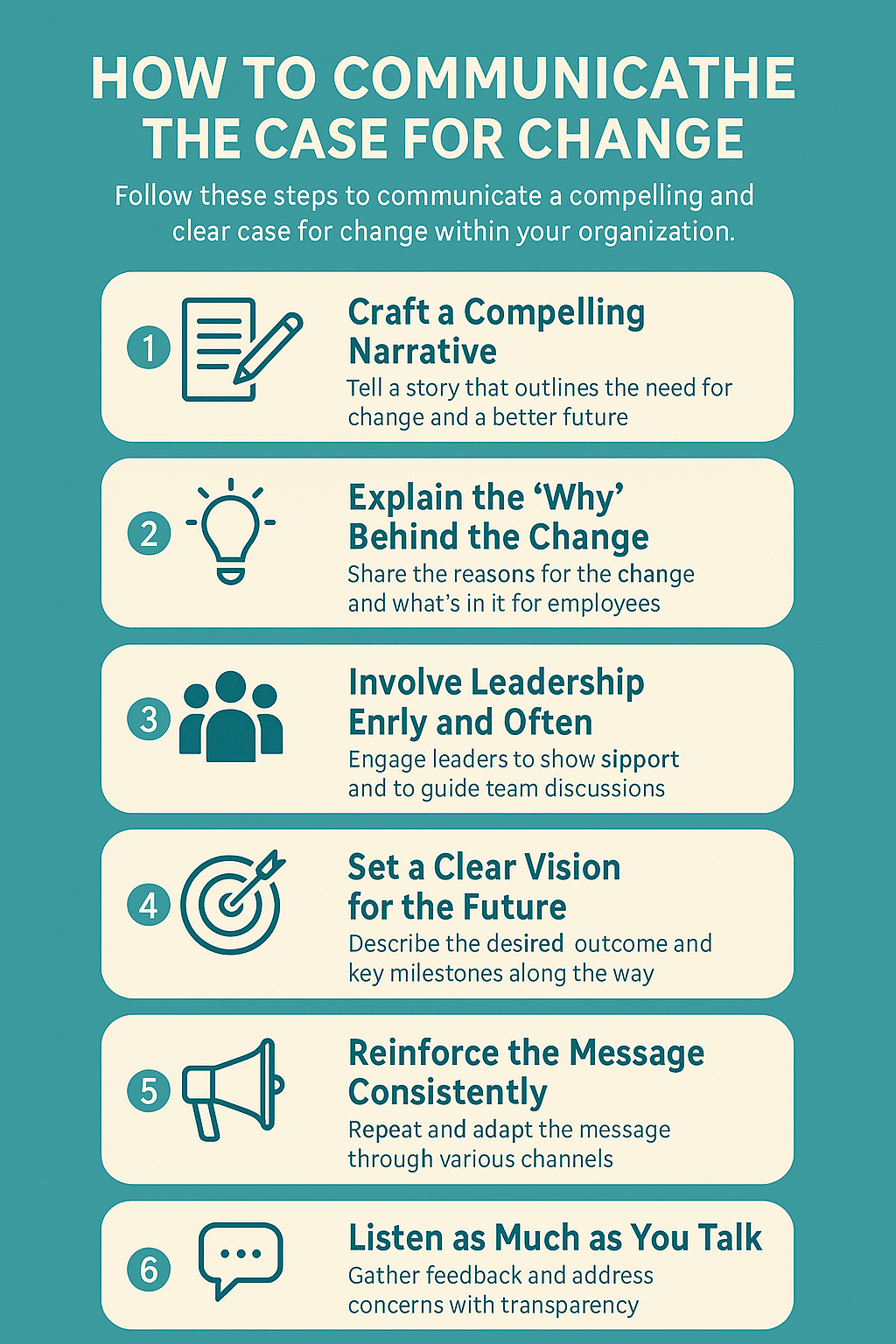
Step 1: Craft a Compelling Narrative
At the heart of every change initiative is a story—a narrative that explains where the organization is, why it needs to change, and what a better future looks like. A compelling narrative makes the change feel meaningful, necessary, and achievable.
Best Practices
- Make it human: Use language that speaks to people, not just processes or profits.
- Structure the story: Use a clear arc—past (where we’ve been), present (why we’re at a turning point), and future (where we’re going).
- Appeal to both emotion and logic: Blend data with anecdotes to reach both the head and the heart.
Mini Case Example:
A regional hospital is merging with a larger healthcare network. The change leader frames the narrative like this:
“For over 70 years, our hospital has cared for this community. But with rising costs and new patient demands, we risk falling behind. By joining this network, we’re gaining new tools, training, and technology that will help us continue serving our patients—better than ever before.”
Step 2: Explain the “Why” Behind the Change
People are far more likely to support change when they understand its purpose. If you don’t communicate the “why,” people will fill in the blanks with assumptions, misinformation, or fear.
Best Practices
- Be transparent: Don’t sugarcoat challenges—acknowledge them honestly.
- Link to strategy: Show how the change aligns with business goals or market realities.
- Answer “What’s in it for me?” (WIIFM): Make the impact on individual roles and teams clear.
Mini Case Example:
A software company needs to transition from selling perpetual licenses to a subscription model. Instead of focusing solely on revenue goals, leadership explains:
“The way people buy and use software is changing. Our current model makes it harder for customers to access updates and support. Moving to subscriptions means we can deliver value faster—and stay competitive in a fast-moving market.”
Step 3: Involve Leadership Early and Often
Top leaders, team managers, and informal influencers should all be part of the communication strategy. When employees hear the same consistent message from multiple credible sources, trust builds. When they don’t, skepticism grows.
Best Practices
- Brief leaders before employees: Give leaders early access to talking points and context so they’re not caught off guard.
- Coach managers: Equip mid-level managers with FAQs, message templates, and resources to hold meaningful team conversations.
- Model alignment: Ensure leadership actions and decisions reflect the change narrative.
Mini Case Example:
At a manufacturing firm implementing automation technology, senior leaders host a series of lunch-and-learns for frontline managers, answering questions candidly and encouraging open discussion. When employees see their managers asking tough questions and getting real answers, they feel more confident and less threatened.
Step 4: Set a Clear Vision for the Future
Communicating the change is not just about what’s ending—it’s about what’s beginning. A clearly articulated future state helps employees see where they’re headed and understand their role in getting there.
Best Practices
- Paint a vivid picture: Describe what success looks like with real-world examples and scenarios.
- Use milestones: Break the vision into stages so progress feels attainable.
- Link to values and purpose: Help employees connect the vision to something they care about.
Mini Case Example:
When a university transitioned to a new online learning platform, its IT department crafted a vision like this:
“In the future, students and instructors will access one seamless platform for all learning—whether on campus or across the globe. They’ll be able to submit work, get feedback, and collaborate—all in one place, with fewer tech headaches. And we’ll be there to support every step of the transition.”
Step 5: Reinforce the Message Consistently
Announcing the case for change once isn’t enough. Communication must be sustained, multi-channeled, and adapted to different moments in the change lifecycle. It should evolve from “why we’re changing” to “how we’re progressing” and “what happens next.”
Best Practices
- Repeat and reframe: Reinforce the message across email, video, meetings, internal social channels, and one-on-ones.
- Celebrate small wins: Use progress updates to keep morale high and momentum going.
- Adapt to feedback: Regularly collect and respond to employee questions or concerns to keep the message relevant.
Mini Case Example:
A financial services firm moving to hybrid work used a series of short weekly videos from leaders to explain each stage of the transition. Each video ended with a “You Asked, We Answered” segment that responded to real employee questions. This made communication feel personal and interactive—not top-down or one-size-fits-all.
Step 6: Listen as Much as You Talk
Communication during change is a two-way street. When leaders actively listen, they gain insight into how the change is landing and where additional support is needed.
Best Practices
- Create safe channels for feedback: Use anonymous surveys, focus groups, and informal check-ins.
- Acknowledge concerns publicly: If a theme keeps surfacing, address it transparently.
- Close the loop: Let employees know what’s being done with their feedback.
Mini Case Example:
During a shift to remote-first operations, an HR team launched monthly “pulse surveys” to gauge stress levels, communication clarity, and support needs. When employees shared that meeting overload was draining productivity, leadership responded by implementing “No Meeting Fridays” and communicated this change with gratitude for the input.
*Content on this page was curated and edited by expert humans with the creative assistance of AI.