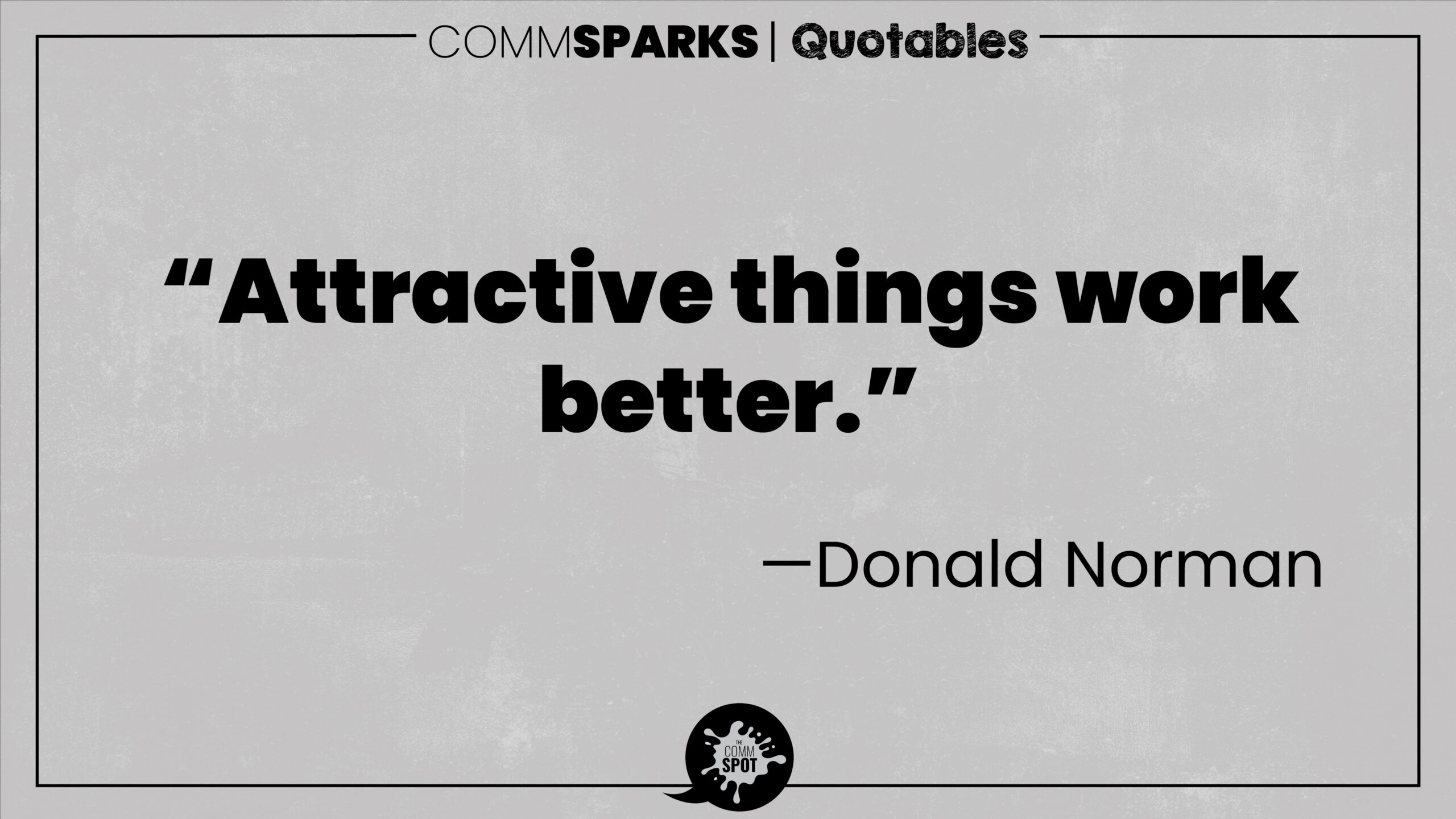
Cognitive scientist Donald Norman once observed that “attractive things work better.” It’s not just a comment on aesthetics — it’s a statement about human psychology. When something looks appealing, we subconsciously believe it will perform better, and we approach it with more openness and confidence.
This principle applies to every form of communication — from a PowerPoint slide to a website, from a report layout to an email design. Visual appeal shapes perception before a single word is read. A clean, balanced design signals professionalism. A cluttered, inconsistent layout signals confusion.
Attractive design also reduces cognitive friction. When people find something visually pleasant, they’re more patient and forgiving of small usability flaws. That’s why thoughtful typography, white space, and cohesive color palettes are not superficial choices — they’re functional ones.
In essence, design is persuasion. The way something looks affects how people feel about what it says. When your visuals invite engagement, your message travels farther.
So, the next time you prepare a presentation or publish a post, don’t treat aesthetics as an afterthought. Treat them as part of the message itself. Because Norman was right: when things look good, they don’t just work better — they communicate better.