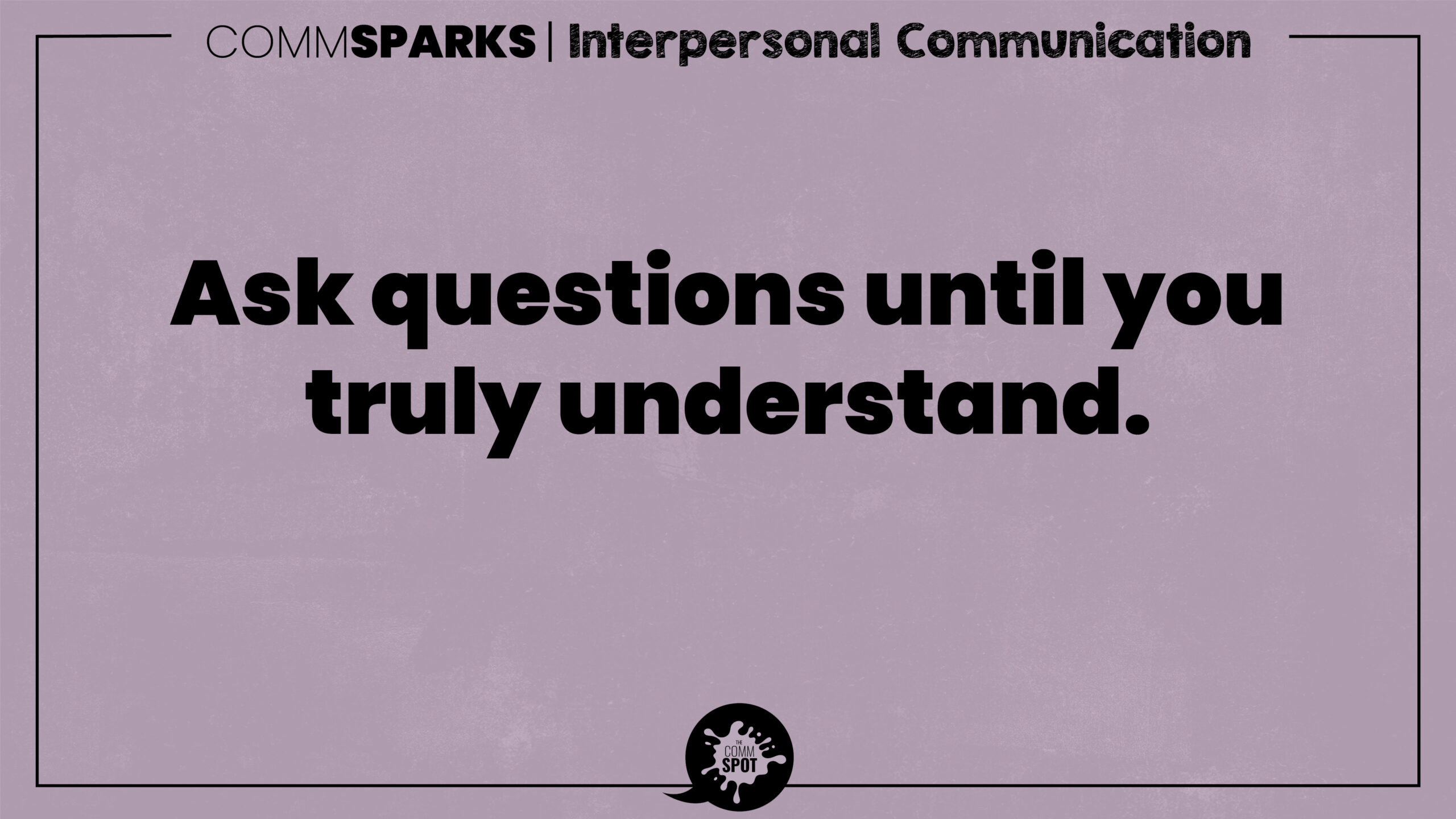
In a world that rewards quick answers, asking questions can feel like slowing down. But true understanding — the kind that builds trust, avoids mistakes, and strengthens relationships — starts with curiosity. Great communicators know that questions are not a sign of ignorance; they’re a mark of respect.
When you ask thoughtful questions, you signal that you care enough to get it right. You show that you’re not assuming what someone means, but actively working to understand their perspective. This mindset transforms conversations from transactions into collaborations.
The best questions are open-ended: “Can you help me understand what that looks like for you?” or “What’s most important about that?” Such questions invite nuance and reveal motives, not just information. And when you ask a follow-up — the question after the question — you often uncover the truth beneath the surface.
In leadership, relationships, and research alike, misunderstanding is expensive. It costs time, trust, and opportunity. But every time you pause to clarify instead of conclude, you reduce that cost.
So, in your next meeting or conversation, resist the urge to assume. Replace certainty with curiosity. Ask one more question than you normally would — and really listen to the answer. Because real understanding isn’t found in knowing what to say; it’s found in knowing what to ask.