In communication, as in life, crises are inevitable. The question isn’t if one will happen — it’s when. The difference between reputational damage and resilience often comes down to a single word: preparation.
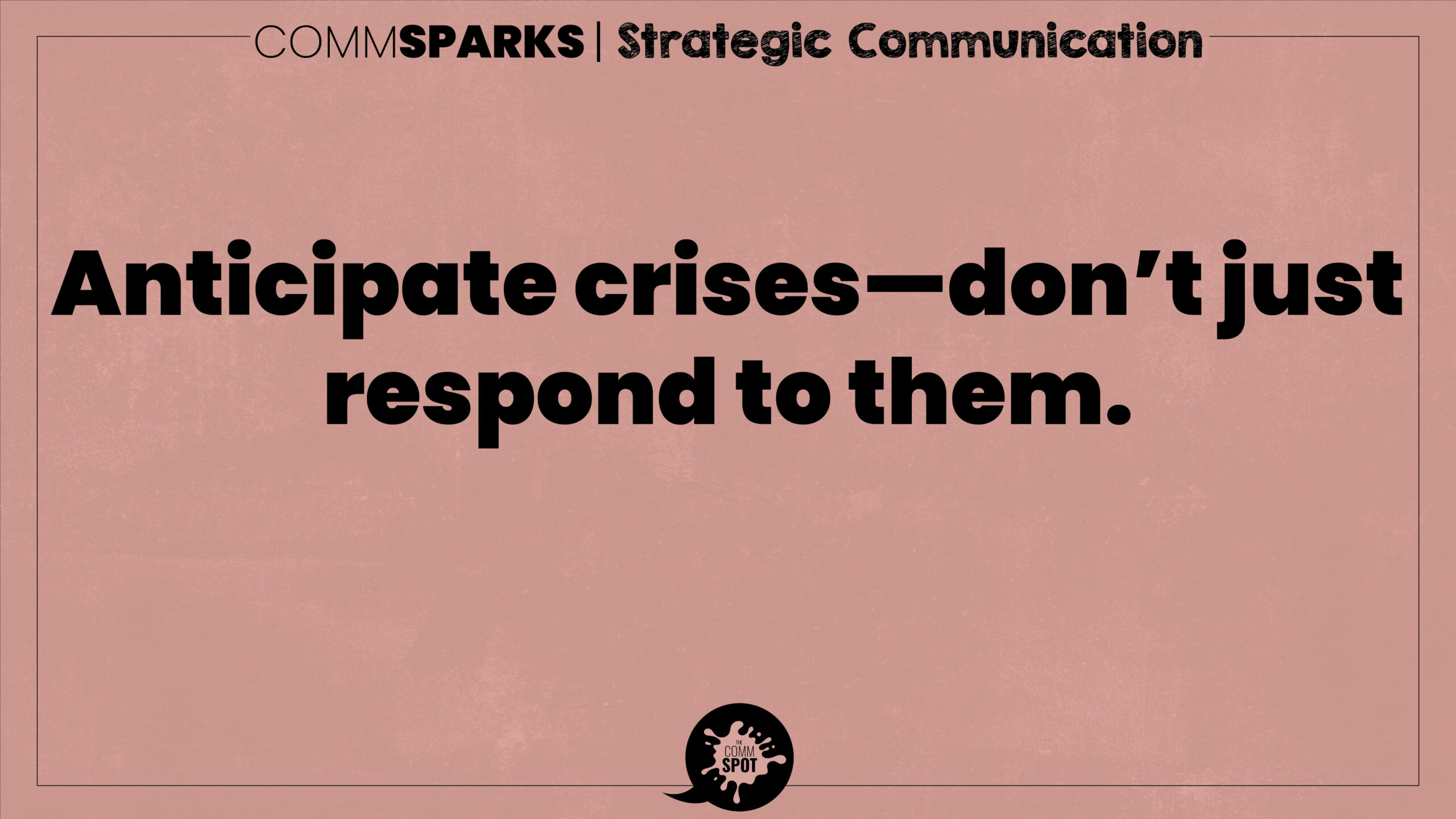
Crisis communication is far more than damage control; it’s proactive strategy. Smart organizations identify potential risks, anticipate scenarios, and define their response long before the headlines hit. That foresight protects not only reputation, but also trust.
When a crisis strikes, emotions run high and time runs short. If you don’t have a plan, you’ll default to panic — and panic communicates chaos. But if you’ve already mapped your message framework, trained your spokespeople, and clarified your chain of command, you can respond with speed and composure.
Anticipating crises also means knowing your values in advance. When your response reflects your core principles — honesty, accountability, empathy — your credibility strengthens even in adversity. In contrast, a rushed or defensive reaction can erode years of trust in a single statement.
So, take the time now to imagine the “what ifs.” Draft holding statements, review protocols, and align your team around tone and truth. The calm you feel when the unexpected happens will come from the preparation you did when everything felt fine.
In crisis communication, reaction is survival — but anticipation is leadership.