
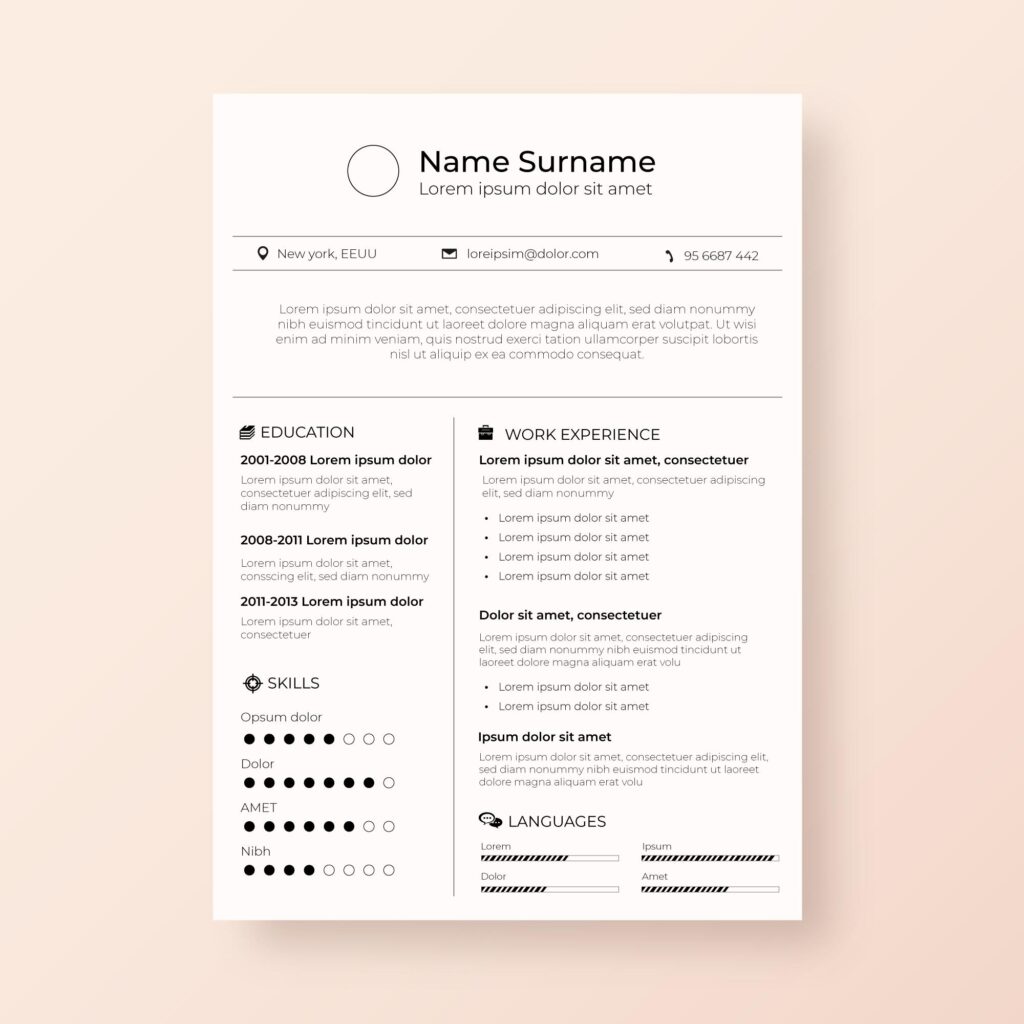
In today’s competitive job market, a well-crafted résumé is your first impression on a potential employer. While chronological résumés dominate the landscape, functional résumés offer an alternative approach. This format prioritizes skills and experience sets over a strictly chronological work history.
Definition of Functional Résumé
A functional résumé prioritizes your skills and areas of expertise over a traditional chronological listing of work experiences. Some key characteristics of a functional résumé include:
- Skills-Based Focus: This format categorizes your skills and experiences under relevant headings such as “Communication Skills,” “Project Management,” or “Software Proficiency.”
- Achievement-Oriented: Functional résumés emphasize your accomplishments and quantifiable results within each skill category.
- Flexible Structure: The order of sections can be adapted to highlight the skills most relevant to the targeted job, offering greater flexibility than a chronological format.
By showcasing your skillsets prominently, a functional resume allows you to present yourself as a well-rounded candidate with the expertise to excel in the desired role.
When to Use Functional Resumes: Highlighting What You Can Do
A functional résumé can be especially beneficial in the following situations:
- Career Change: If you’re transitioning to a new field, a functional résumé allows you to emphasize transferable skills and relevant experiences from previous roles, even if they weren’t directly in your target field.
- Re-Entering the Workforce: After a career break, a functional résumé helps showcase your continued skill development and highlights relevant skills gained through volunteer work or personal projects.
- Non-Linear Career Path: If your career journey has involved freelance work, contract positions, or frequent industry shifts, a functional résumé allows you to present your skills effectively without making it appear as if you’re unable to maintain a position or have a spotty work history.
However, the functional format might not be suitable for everyone. Consider a chronological résumé if:
- Strong Linear Progression: If you have a consistent work history with steady advancement within your field, a chronological resume showcases your career path and expertise effectively.
- Extensive Industry Experience: For established professionals with a deep understanding of their field, a chronological format allows them to detail their specific industry knowledge and contributions within each role.
- Recent Graduate: For recent graduates with limited work experience, a chronological resume can highlight their academic achievements and any relevant internships or projects alongside their limited formal work placements.
Understanding these scenarios ensures you choose the résumé format that best presents your qualifications for the specific job you’re targeting.
*Content on this page was curated and edited by expert humans with the creative assistance of AI.