
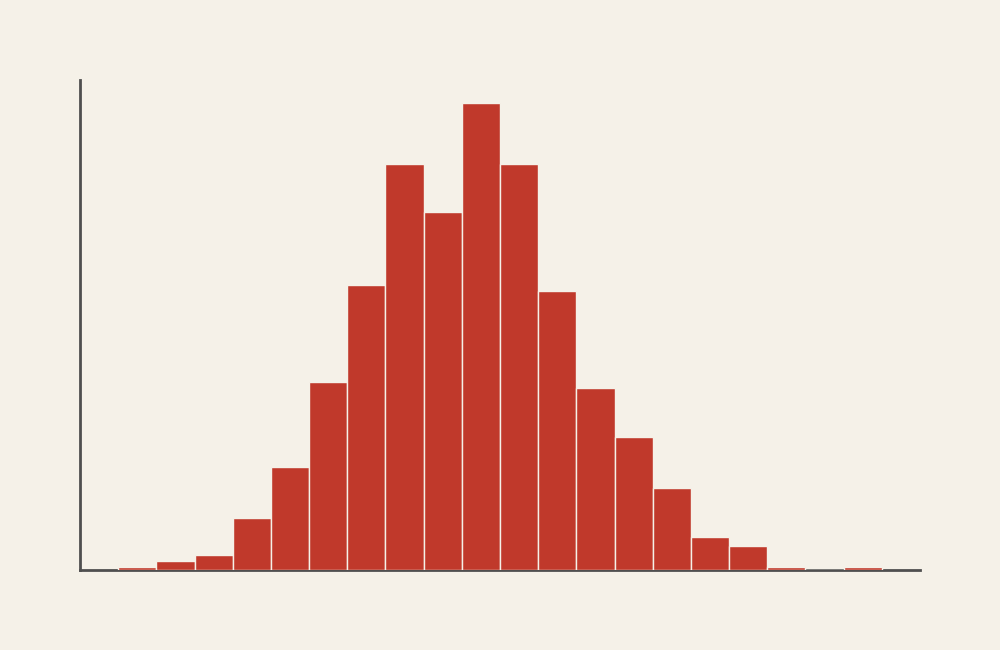
Histogram: How to Show Distribution and Frequency
A histogram helps reveal how values are distributed across a range. Use it to show frequency, spread, and patterns within numerical data, making it easier to see clusters, gaps, and skew.
Turn to a histogram when understanding distribution matters more than comparing categories. Instead of listing individual values, the chart groups data into intervals so overall structure becomes visible.
What a Histogram Is
A histogram displays numerical data using adjacent bars that represent ranges, often called bins. Each bar shows how many observations fall within a specific interval.
Common elements include:
- Continuous numeric axis divided into bins
- Bars that touch to show continuity
- Heights representing frequency or count
- Consistent bin widths
Unlike a bar chart, a histogram represents continuous data rather than separate categories.
When to Use a Histogram
Use a histogram when the goal is to understand how data is distributed.
This visual works especially well when the aim is to:
- Show frequency patterns
- Reveal skewness or symmetry
- Identify clusters or gaps
- Detect outliers
- Explore variability within a dataset
- Introduce audiences to statistical distribution
A histogram works best when the purpose is to show how values spread across a range.
Types of Data Sets That Work Best for a Histogram
Histograms work best with continuous numerical data.
Strong candidates include:
- Test scores or grades
- Response times or durations
- Prices or costs
- Measurements such as height or weight
- Performance metrics
- Environmental readings
Larger datasets typically produce clearer and more meaningful distributions.
Real-World Examples of a Histogram
Histograms appear frequently in research, analytics, and education when distribution needs to be understood quickly.
Test Scores or Assessment Results


Show how scores cluster around certain ranges and reveal whether results are balanced or skewed.
Income or Salary Distribution


Highlight spread, inequality, and concentration across income levels.
Website or System Performance

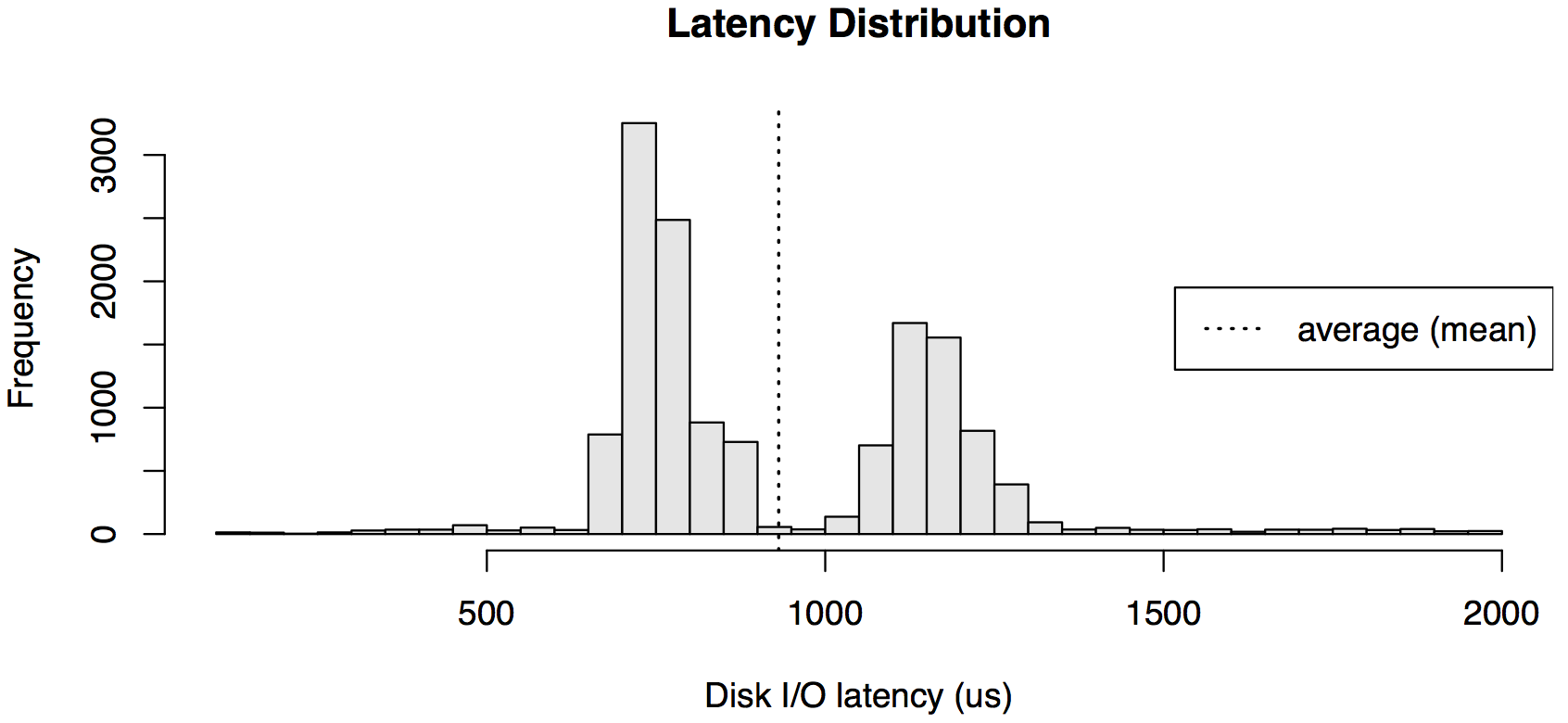

Reveal typical performance ranges and identify slow outliers.
Scientific or Experimental Data


Show how measurements distribute across ranges and whether patterns emerge.
Environmental or Climate Measurements

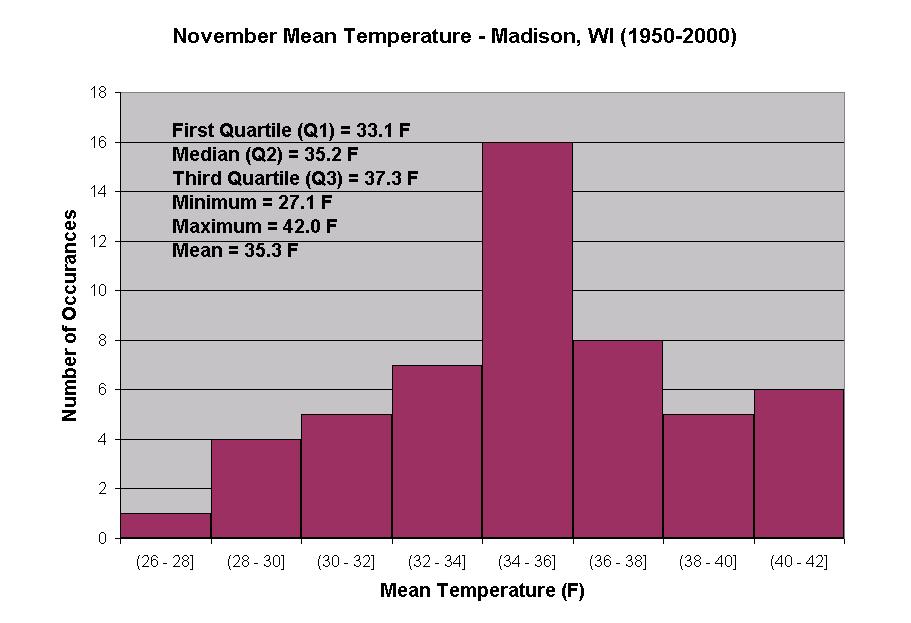
Display how readings vary over time or across locations.
What to Avoid or Be Careful Of with a Histogram
❌ Don’t confuse it with a bar chart
Histograms represent continuous ranges, not discrete categories.
❌ Don’t choose poor bin sizes
Bins that are too wide hide detail, while bins that are too narrow create noise.
❌ Don’t leave axes unlabeled
Viewers need to understand what ranges and counts represent.
❌ Don’t assume shape equals meaning
Distribution patterns require interpretation and context.
❌ Don’t use it when exact comparisons between groups are needed
Histograms emphasize distribution, not direct category comparison.
*Content on this page was curated and edited by expert humans with the creative assistance of AI.