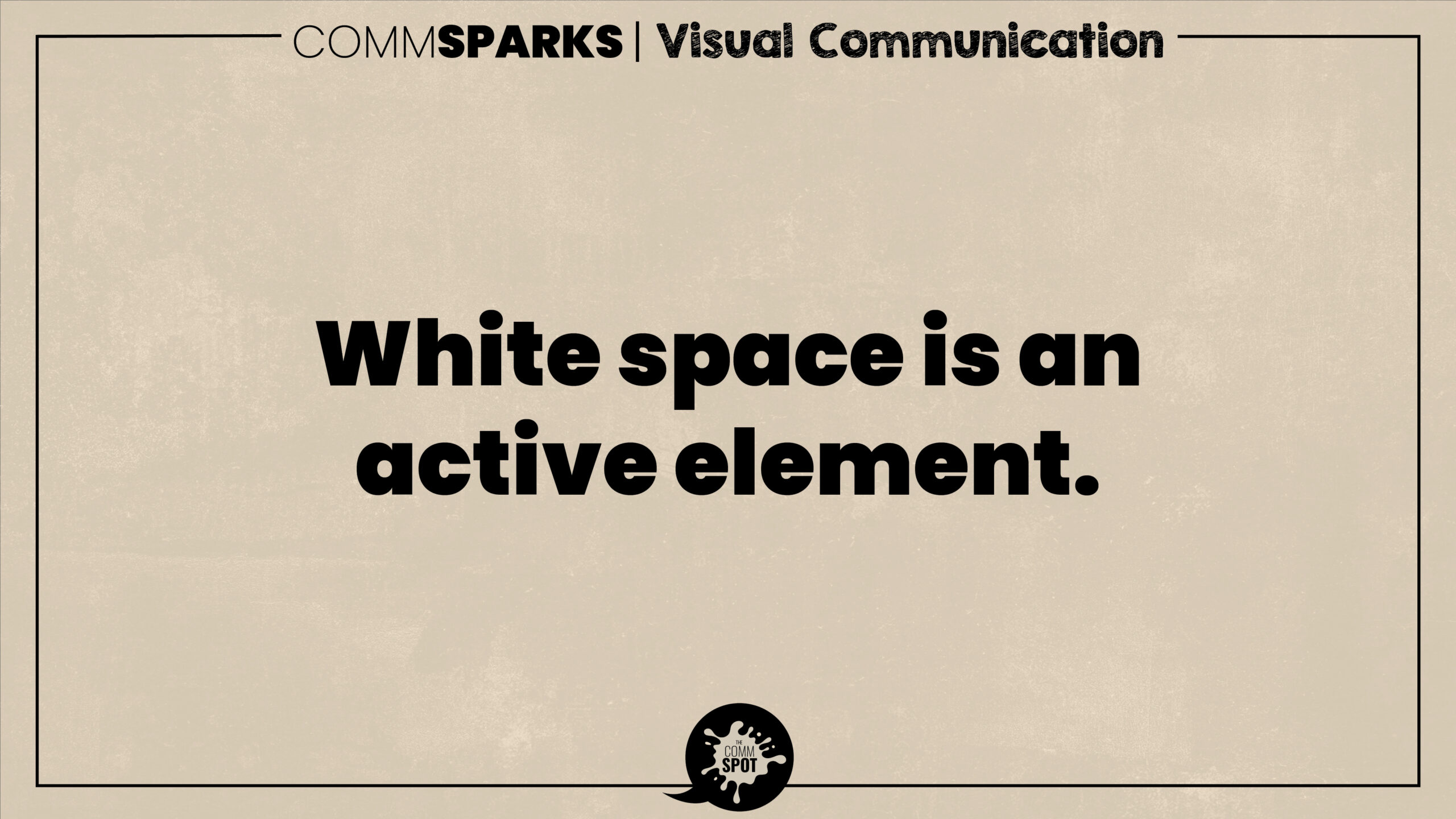
White space structures information and reduces cognitive load. It separates ideas, signals hierarchy, and improves readability. Rather than being empty, white space actively guides attention and interpretation. When space is removed, content becomes dense and difficult to process.
Effective use of white space allows audiences to scan, pause, and prioritize. It improves usability in both print and digital contexts. Treating white space as optional decoration undermines its functional role. White space is not wasted space; it is working space.
Try it!
- Use spacing to group content.
- Add space around key messages.
- Increase line spacing in dense text.