
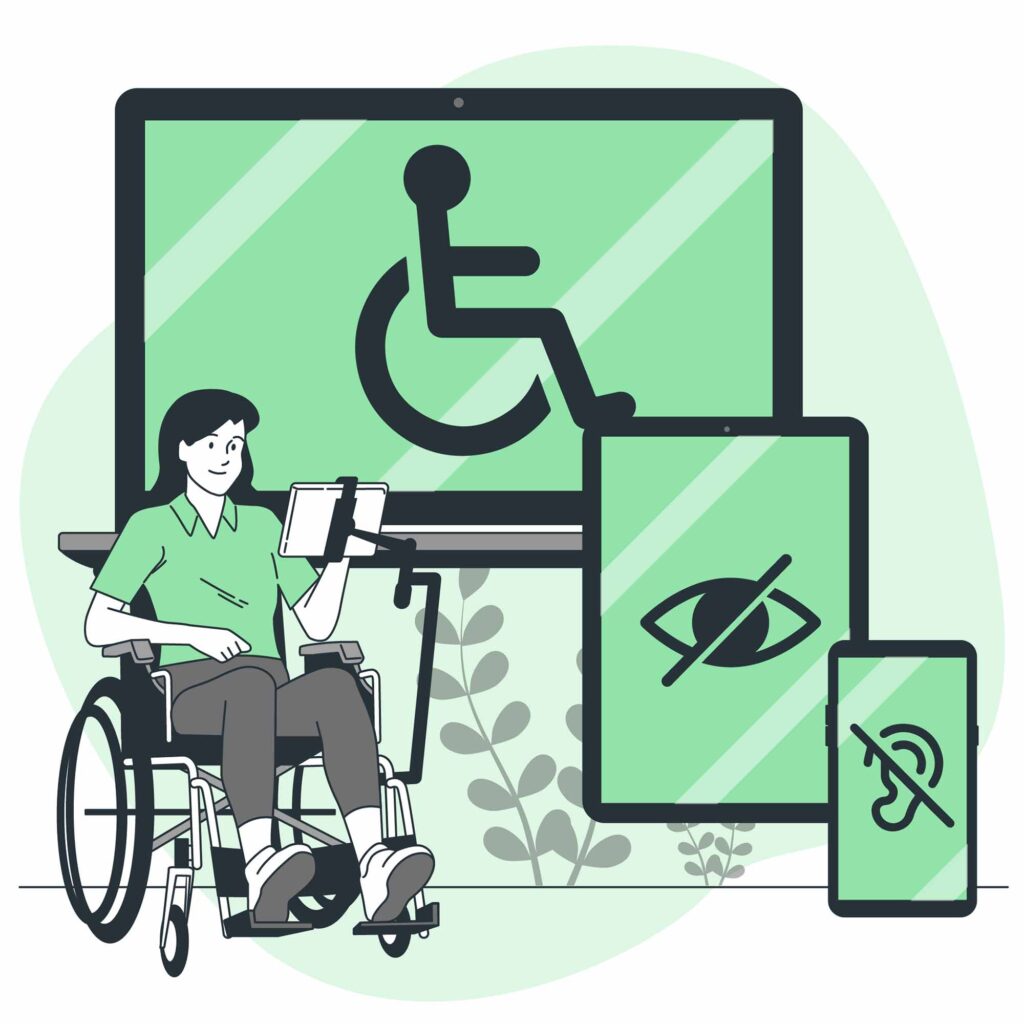
Definition of Accessibility
Accessibility refers to the design and implementation of products, environments, and services to ensure that they can be accessed, understood, and used by all individuals, including those with disabilities. The World Health Organization (WHO) defines accessibility as “the degree to which a product, device, service, or environment is available to as many people as possible.” The goal of accessibility is to create inclusive and barrier-free experiences that enable everyone, regardless of their abilities or limitations, to fully participate in various aspects of life (WHO).
Why Accessibility Matters
When you make things accessibile, you create a more inclusive environment for all people. According to the United Nations Convention on the Rights of Persons with Disabilities (CRPD), accessibility is a fundamental human right. It emphasizes the importance of removing barriers to information and services to empower individuals with disabilities to engage in education, employment, and social activities on an equal basis with their peers (UN CRPD). Accessibility is not only a legal and ethical imperative but also a means of unlocking the potential of diverse talents and perspectives, leading to a more enriched and innovative community.
Examples of Accessibility
1. Web Accessibility
Websites designed with accessibility in mind ensure that people with disabilities can navigate and comprehend online content effortlessly. This includes providing alternative text for images, captions for videos, and ensuring that the site is navigable using screen readers. The Web Content Accessibility Guidelines (WCAG) provide comprehensive standards for web accessibility, emphasizing principles such as perceivability, operability, and understandability (W3C).
2. Accessible Public Spaces
Public spaces designed with accessibility features, such as ramps, elevators, and tactile paving, enable individuals with mobility challenges to navigate freely. The Americans with Disabilities Act (ADA) in the United States sets standards for accessible design in public spaces, emphasizing the removal of architectural and communication barriers (ADA). Consider a public library with wheelchair ramps at the entrance, wide aisles, and accessible restrooms. This ensures that people with physical disabilities can independently access the library’s resources and services, fostering a more inclusive community environment.
3. Inclusive Educational and Communication Materials
In education and communication, accessible materials accommodate diverse learning, reading, and hearing needs. For example, providing textbooks in digital formats with adjustable font sizes benefits students with visual impairments or reading difficulties. Additionally, closed captions in videos cater to people with hearing impairments, ensuring that all people can access and engage with the educational content equally.
*Content on this page was curated and edited by expert humans with the creative assistance of AI.