
Overview / Introduction
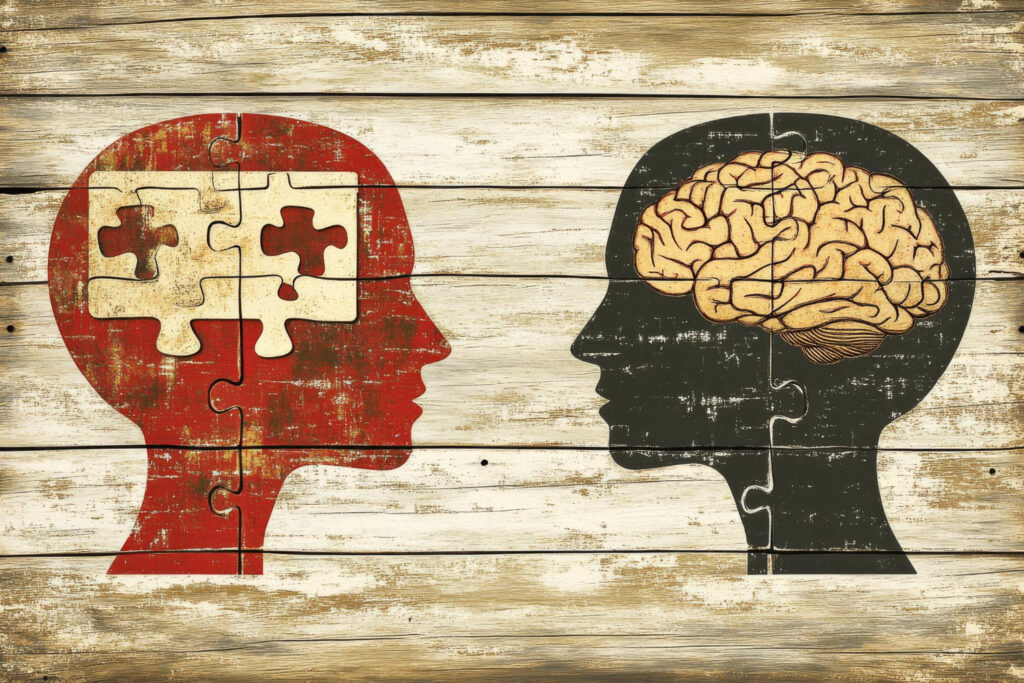
Dual Coding Theory (DCT) explains how people process and remember information through two interconnected systems—verbal and visual. Developed by Allan Paivio in the 1970s, the theory posits that information is stored and retrieved more effectively when represented in both words and images. In communication and education, Dual Coding Theory highlights how combining text, visuals, and design elements can enhance understanding, recall, and engagement.
History and Background
Dual Coding Theory emerged from cognitive psychology during a period when researchers were exploring how humans encode and retrieve knowledge. Allan Paivio proposed that language and imagery operate through distinct but complementary cognitive systems that interact to strengthen memory.
- Allan Paivio (1971, 1986) developed the framework to explain differences in recall between verbal and visual stimuli.
- Built upon information processing theory, which views the mind as an active processor of data.
- Provided empirical grounding for the picture superiority effect, showing that images are more easily remembered than words alone.
- Influenced by early studies in cognitive psychology, linguistics, and semiotics.
The theory became foundational for multimedia learning, instructional design, and visual communication, offering a scientific basis for why visuals enhance comprehension.
Core Concepts
Dual Coding Theory centers on the interaction between two cognitive subsystems—one for language and one for imagery—and how they work together to reinforce learning.
1. Two Cognitive Systems
- Verbal System: Processes linguistic information such as spoken or written words, labels, and symbols.
- Nonverbal (Imagery) System: Processes visual and sensory information, such as pictures, diagrams, or mental images.
Each system can operate independently, but learning is most effective when both are activated and linked.
2. Dual Coding
When information is encoded in both verbal and visual formats, it creates two memory traces instead of one.
- This redundancy strengthens recall because if one representation fades, the other can cue retrieval.
- Example: A chart labeled with short descriptive text is easier to remember than text alone.
3. Referential Connections
The two systems are connected through referential processing—the mental linking of words and images.
- For instance, reading the word “apple” activates both linguistic and visual representations of the fruit.
- Communication is more effective when verbal and visual cues support, rather than duplicate, each other.
4. The Picture Superiority Effect
Paivio’s experiments demonstrated that people remember pictures significantly better than words alone.
- Images create richer, dual-coded representations.
- This principle underlies modern infographic, advertising, and learning design.
5. Cognitive Efficiency
Dual coding reduces cognitive load by distributing information across two processing channels, freeing mental capacity for comprehension and synthesis.
Applications
Dual Coding Theory has broad applications in communication, education, media, and design, wherever understanding depends on effective message integration.
- Instructional Design: Combining visuals with concise text enhances learning efficiency.
- Visual Communication: Infographics, diagrams, and data visuals make complex ideas memorable.
- Advertising and Branding: Logos and slogans work together to build brand recognition through dual encoding.
- Public Relations and Presentations: Visual aids improve audience retention and engagement.
- Health Communication: Infographics simplify medical information for public understanding.
- Web and UX Design: Icons, images, and text balance to create intuitive navigation and meaning.
- Corporate Training: Visual case studies and storytelling improve comprehension and recall.
Dual Coding Theory underlies much of modern communication design, where clarity, simplicity, and multimodal integration drive effectiveness.
Strengths and Contributions
Dual Coding Theory remains one of the most empirically supported frameworks for explaining the benefits of multimodal communication.
- Scientific foundation for the effectiveness of visuals in learning and persuasion.
- Connects language, imagery, and cognition within a single model.
- Provides a theoretical basis for multimedia learning and visual literacy education.
- Supports principles of data visualization and educational psychology.
- Empirically validates the picture superiority effect.
Its practical relevance extends from classroom instruction to corporate branding, supporting the principle that visuals amplify verbal meaning.
Criticisms and Limitations
Although widely accepted, Dual Coding Theory faces several critiques and refinements.
- Over-Simplification: Critics argue that human cognition involves more than two distinct systems.
- Overlap with Working Memory Models: Some theories (e.g., Baddeley’s model) offer more nuanced explanations of short-term storage.
- Cultural and Contextual Variation: Visual symbols may carry different meanings across cultures.
- Cognitive Overload: Poorly designed visuals can increase, rather than reduce, mental strain.
- Neglect of Emotion: The theory focuses on processing efficiency, not affective engagement.
Despite these limitations, Dual Coding Theory remains central to evidence-based communication design and multimedia learning.
Key Scholars and Works
Dual Coding Theory and its applications have been explored and expanded across multiple disciplines.
- Paivio, A. (1971). Imagery and Verbal Processes. Holt, Rinehart & Winston.
- Paivio, A. (1986). Mental Representations: A Dual Coding Approach. Oxford University Press.
- Clark, J. M., & Paivio, A. (1991). “Dual Coding Theory and Education.” Educational Psychology Review, 3(3), 149–210.*
- Mayer, R. E. (2001). Multimedia Learning. Cambridge University Press.
- Sweller, J. (1988). “Cognitive Load During Problem Solving: Effects on Learning.” Cognitive Science, 12(2), 257–285.*
- Sadoski, M., & Paivio, A. (2013). Imagery and Text: A Dual Coding Theory of Reading and Writing. Routledge.
- Mayer, R. E., & Moreno, R. (2003). “Nine Ways to Reduce Cognitive Load in Multimedia Learning.” Educational Psychologist, 38(1), 43–52.*
Related Theories
Dual Coding Theory connects closely with several other models of cognition, learning, and visual communication.
- Cognitive Load Theory (Sweller): Explains how distributing information across channels reduces overload.
- Multimedia Learning Theory (Mayer): Applies DCT to digital learning environments.
- Information Processing Theory: Describes how sensory input becomes encoded in memory.
- Visual Rhetoric and Semiotics: Study how images convey symbolic and cultural meaning.
- Gestalt Theory: Explains how humans perceive visual patterns holistically.
- Affective Design Theory: Adds emotional impact to dual coding for engagement.
These frameworks collectively reinforce how verbal and visual modes work together to create meaningful, memorable communication.
Examples and Case Studies
Dual Coding Theory has influenced communication across education, marketing, and design.
- Educational Infographics: Pairing short text summaries with visuals improves comprehension of complex topics.
- TED Talks and Presentations: Speakers use simple slides with imagery to reinforce verbal explanations.
- Public Health Campaigns: Visual symbols (e.g., seat belt icons, recycling logos) paired with short phrases improve recall.
- Brand Communication: Nike’s “swoosh” and “Just Do It” slogan encode brand meaning through image and text synergy.
- Scientific Visualization: Diagrams and labeled illustrations in textbooks strengthen conceptual understanding.
- Social Media Messaging: Visual quotes and image-text pairings drive higher engagement and retention.
In every case, pairing verbal and visual elements creates redundant yet reinforcing cues, improving audience understanding and memory.
References and Further Reading
- Paivio, A. (1971). Imagery and Verbal Processes. Holt, Rinehart & Winston.
- Paivio, A. (1986). Mental Representations: A Dual Coding Approach. Oxford University Press.
- Clark, J. M., & Paivio, A. (1991). “Dual Coding Theory and Education.” Educational Psychology Review, 3(3), 149–210.*
- Mayer, R. E. (2001). Multimedia Learning. Cambridge University Press.
- Sadoski, M., & Paivio, A. (2013). Imagery and Text: A Dual Coding Theory of Reading and Writing. Routledge.
- Sweller, J. (1988). “Cognitive Load During Problem Solving.” Cognitive Science, 12(2), 257–285.*
- Mayer, R. E., & Moreno, R. (2003). “Nine Ways to Reduce Cognitive Load in Multimedia Learning.” Educational Psychologist, 38(1), 43–52.*
- Ware, C. (2013). Information Visualization: Perception for Design. Morgan Kaufmann.
*Content on this page was curated and edited by expert humans with the creative assistance of AI.