
Overview
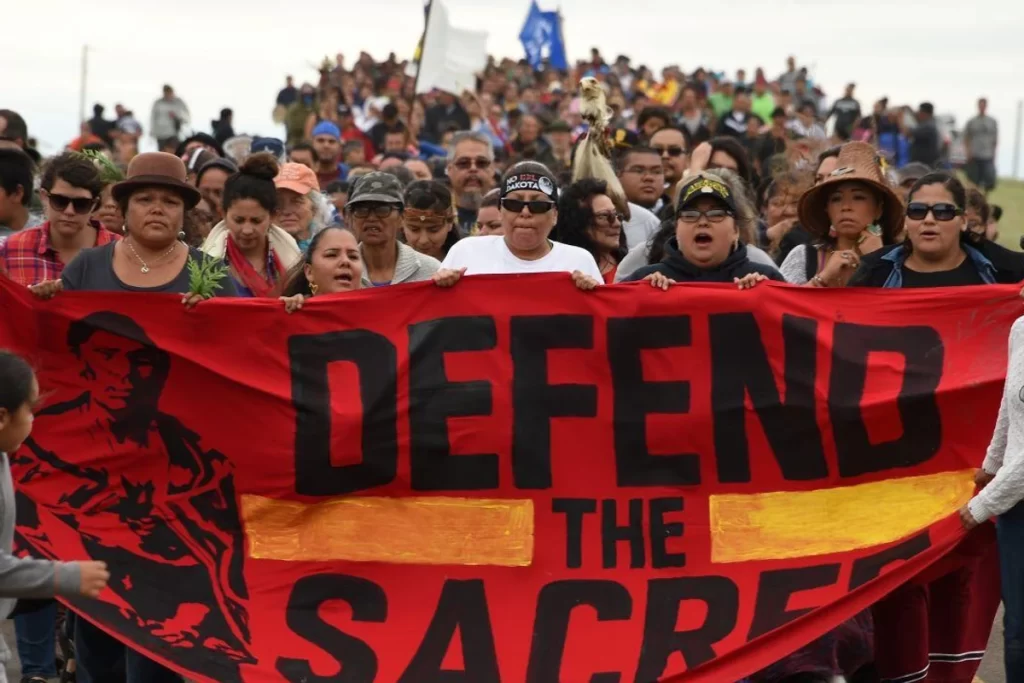
The Standing Rock #NoDAPL movement was a landmark Native-led activist campaign opposing the construction of the Dakota Access Pipeline (DAPL) through sacred lands and near the water supply of the Standing Rock Sioux Tribe. Combining traditional resistance, legal challenges, and global social media activism, the movement became a symbol of Indigenous sovereignty and environmental justice. Its ability to mobilize allies worldwide demonstrated the power of grassroots activism amplified through digital platforms.
Context and Events
In 2016, Energy Transfer Partners (ETP) began constructing the Dakota Access Pipeline, designed to transport crude oil from North Dakota to Illinois. The Standing Rock Sioux Tribe opposed the project, arguing it threatened their sacred sites and endangered the Missouri River, their primary water source.
Key developments included:
- Protest camps: The Sacred Stone Camp, formed in April 2016, grew into a large, sustained encampment that drew thousands of activists, Indigenous nations, and allies.
- Direct action: Water protectors staged blockades, prayer circles, and nonviolent resistance against construction crews and law enforcement.
- Militarized response: Law enforcement used tear gas, rubber bullets, water cannons, and mass arrests against protesters, sparking outrage.
- Social media amplification: The hashtag #NoDAPL went viral, with global supporters “checking in” on Facebook to Standing Rock to show solidarity and confuse law enforcement surveillance.
- Political attention: The Obama administration temporarily halted construction in late 2016, but the Trump administration revived the project in 2017, reigniting tensions.
Communication Strategy
The Standing Rock movement blended Indigenous traditions with modern digital activism:
- Spiritual framing: The movement emphasized prayer, ceremony, and the phrase “Mni Wiconi” (Water is Life), framing the protest as both cultural and environmental.
- Visual storytelling: Images of Native elders, youth, and allies standing peacefully against militarized police generated powerful media coverage.
- Digital solidarity: Social media made Standing Rock a global issue, engaging millions who could not physically attend.
- Intersectional messaging: The movement linked Indigenous rights, environmental justice, and anti-corporate power, broadening its appeal.
- Grassroots leadership: Local Indigenous voices led communications, ensuring authenticity and cultural grounding.
Outcomes
The #NoDAPL movement had mixed immediate results but lasting symbolic impact:
- Policy impact: While the Obama administration paused the pipeline, it was ultimately completed under Trump. In 2020, a federal judge ruled the pipeline had been improperly permitted, but it continued operating during legal disputes.
- Global solidarity: The protests united Indigenous nations worldwide and drew support from environmentalists, human rights activists, and celebrities.
- Cultural shift: Standing Rock elevated Indigenous sovereignty and environmental justice in public consciousness, inspiring future movements such as resistance to Line 3 in Minnesota.
- Media legacy: The militarized police response became a stark example of how environmental defenders and Indigenous activists face disproportionate repression.
Though the pipeline was not permanently halted, Standing Rock became a touchstone for activism, symbolizing the intersection of environmental protection and Indigenous rights.
Lessons Learned
- Local struggles can become global movements – Digital platforms turned Standing Rock into an international cause.
- Cultural framing strengthens activism – “Water is Life” created a unifying moral and spiritual message.
- Images of injustice can shift narratives – Peaceful protesters facing militarized force galvanized global outrage.
- Intersectionality broadens coalitions – Linking Indigenous sovereignty with environmental justice attracted diverse allies.
- Even partial wins build momentum – Though the pipeline was completed, the movement reshaped activism and inspired future resistance campaigns.
*Content on this page was curated and edited by expert humans with the creative assistance of AI.