

Why Power and Authority Matter at Work
Power and authority are unavoidable forces in any workplace. Whether they stem from a job title, expertise, or interpersonal influence, these dynamics shape how decisions are made, how people interact, and who thrives—or struggles—within an organization. While often viewed through a negative lens, power and authority aren’t inherently bad. When used ethically and intentionally, they can create clarity, drive innovation, and support cohesive teams. But when misused or left unchecked, they can breed fear, silence diverse perspectives, and erode trust.
Defining Power and Authority in the Workplace
Power is the ability to influence others, while authority is the formal right to make decisions and command resources. A senior manager may hold authority based on their role, but a junior employee might wield power through subject matter expertise or strong relationships across departments. Understanding the distinction helps organizations ensure that influence flows from credibility and integrity—not just hierarchy.
For instance, in many tech startups, engineers with deep technical knowledge often hold significant power even if they don’t manage anyone directly. Conversely, in highly bureaucratic environments, someone with a high-ranking title may command respect simply due to their place on the org chart.
Types of Power Structures in Organizations
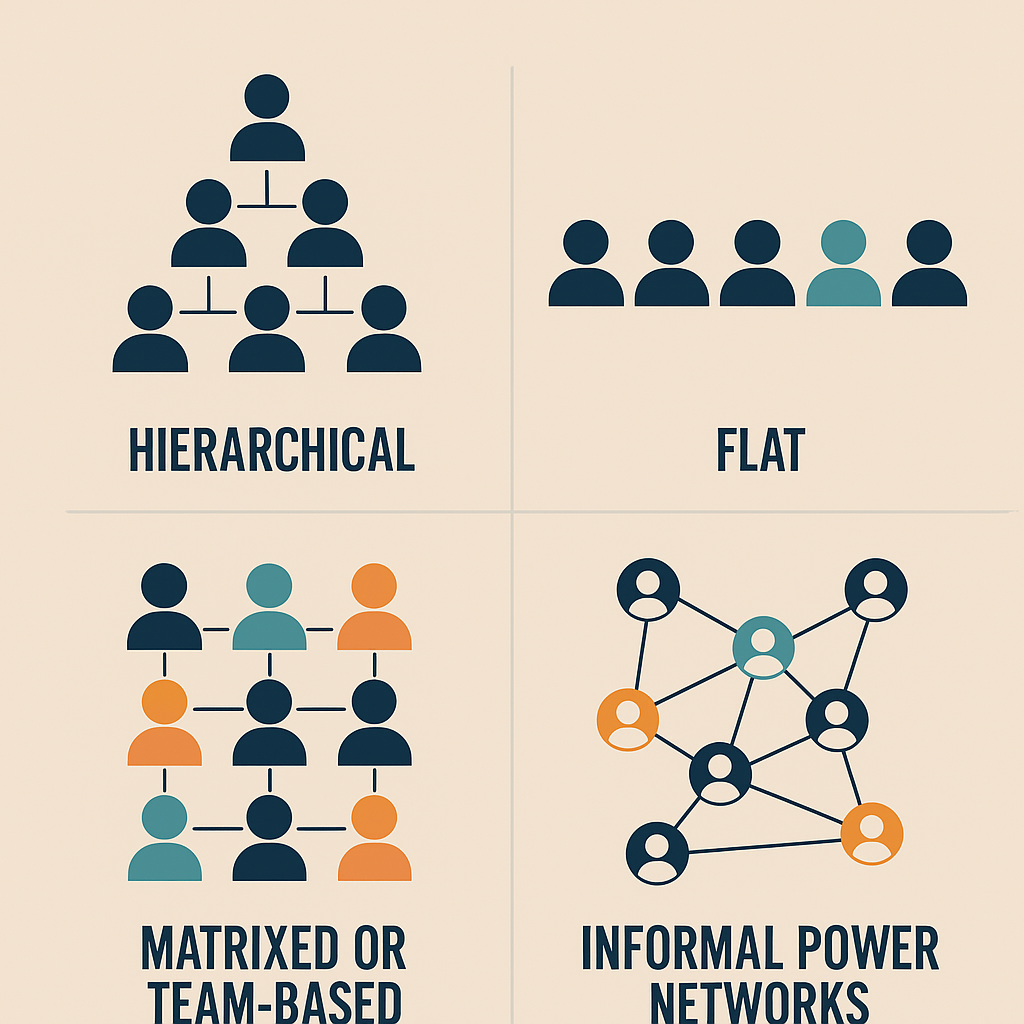
Different organizations adopt different power structures, each with pros and cons. Here are a few common types:
- Hierarchical: Clear lines of authority and reporting (e.g., military, government agencies). These offer stability but can suppress new ideas.
- Flat: Fewer layers of management, empowering employees to take initiative (e.g., many design firms and small businesses). However, the lack of structure can lead to ambiguity.
- Matrixed or Team-Based: Employees report to multiple supervisors across functions (e.g., in global project teams). This can increase collaboration but also cause role confusion.
- Informal Power Networks: Regardless of structure, informal influencers (like a charismatic employee or seasoned admin) often hold hidden power that shapes culture behind the scenes.
Real-world example: At Google, while managers have authority, the company is known for valuing collaborative decision-making and peer input, which disperses power in a way that supports innovation.
How Power and Authority Influence Workplace Culture
Culture is often described as “how things are done around here,” and much of that is shaped by how power is distributed and exercised. Leaders who rely on positional authority without earning respect often foster a culture of fear or compliance. On the other hand, leaders who share power, seek input, and model transparency help cultivate psychological safety and inclusivity.
Consider the difference between a manager who says, “Do this because I said so,” versus one who explains the rationale and invites questions. The first approach may deliver short-term results; the second builds trust and engagement. Over time, these approaches solidify into cultural norms—either rigid or resilient.
Impact on Communication and Decision-Making
Power dynamics dictate who speaks up, who gets heard, and who gets credit. In environments where authority is tightly held, junior employees may remain silent even when they have valuable insights. This stifles creativity and slows down problem-solving. In contrast, distributed power structures encourage broader participation.
For example, Amazon’s leadership principle “Have Backbone; Disagree and Commit” encourages employees to challenge ideas—even if they come from the top. It’s a cultural norm that pushes back against authority when needed, helping decisions improve through debate rather than blind obedience.
Power and Efficiency: When It Helps and When It Hurts
When wielded wisely, power can accelerate workflows, clarify expectations, and prevent decision paralysis. In high-stakes situations—like emergency response or crisis management—clear authority is critical for decisive action.
However, too much control can create bottlenecks. A senior leader who insists on approving every minor task slows the team down and demoralizes capable staff. Worse, employees may start “managing up” rather than focusing on doing good work.
A balance must be struck. Leaders should delegate authority where appropriate and reserve their influence for high-impact decisions.
Balancing Authority with Collaboration and Ethics
The most effective leaders understand that authority is not a license to dominate but a responsibility to steward resources and people wisely. Ethical leadership means using power to uplift rather than control, to create opportunity rather than barriers.
Leaders can foster balance by:
- Encouraging dissent and feedback
- Being transparent about decision-making processes
- Recognizing and addressing bias in power structures
- Holding themselves accountable to the same standards as their teams
Companies like Patagonia have made ethics and collaborative culture central to their brand—making decisions that prioritize environmental values, employee well-being, and transparent governance. Their authority doesn’t just serve shareholders; it serves broader human and environmental goals.
Recognizing and Navigating Power Dynamics as an Employee
Employees don’t need formal authority to understand and navigate workplace power. Knowing who holds influence—both officially and unofficially—can help individuals communicate strategically and build credibility.
Tips for navigating power dynamics:
- Pay attention to who influences decisions behind the scenes
- Build alliances across departments, not just within your team
- Speak up when appropriate, but know your audience
- Document accomplishments and contributions to maintain visibility
A new hire at a marketing agency noticed that a senior account manager regularly deferred to a more junior creative director for client ideas. By recognizing this informal power structure, she knew to include the creative director early in campaign planning, ensuring smoother approval processes and stronger support for her work.
Conclusion: Reimagining Authority for Modern Workplaces
The future of work demands a shift from rigid authority to agile influence. While some structure is necessary, organizations thrive when authority is earned and power is shared. Leaders who combine positional responsibility with humility, ethics, and collaboration can build workplaces that are not only more efficient—but also more humane, inclusive, and innovative.
Understanding the mechanics of power at work isn’t just for executives. It’s essential knowledge for anyone looking to navigate, influence, and shape the culture around them.
*Content on this page was curated and edited by expert humans with the creative assistance of AI.