

When organizations initiate change—for a new strategy, technology, policy, structure, or anything else—success hinges not only on technical execution but also on how well the change is communicated and received. Stakeholder engagement and communication planning are critical pieces to the process.
Stakeholders—employees, customers, managers, partners, and more—bring varied needs, expectations, and influence to any change effort. Engaging them thoughtfully and strategically is essential to build trust, reduce resistance, and ensure smooth implementation.
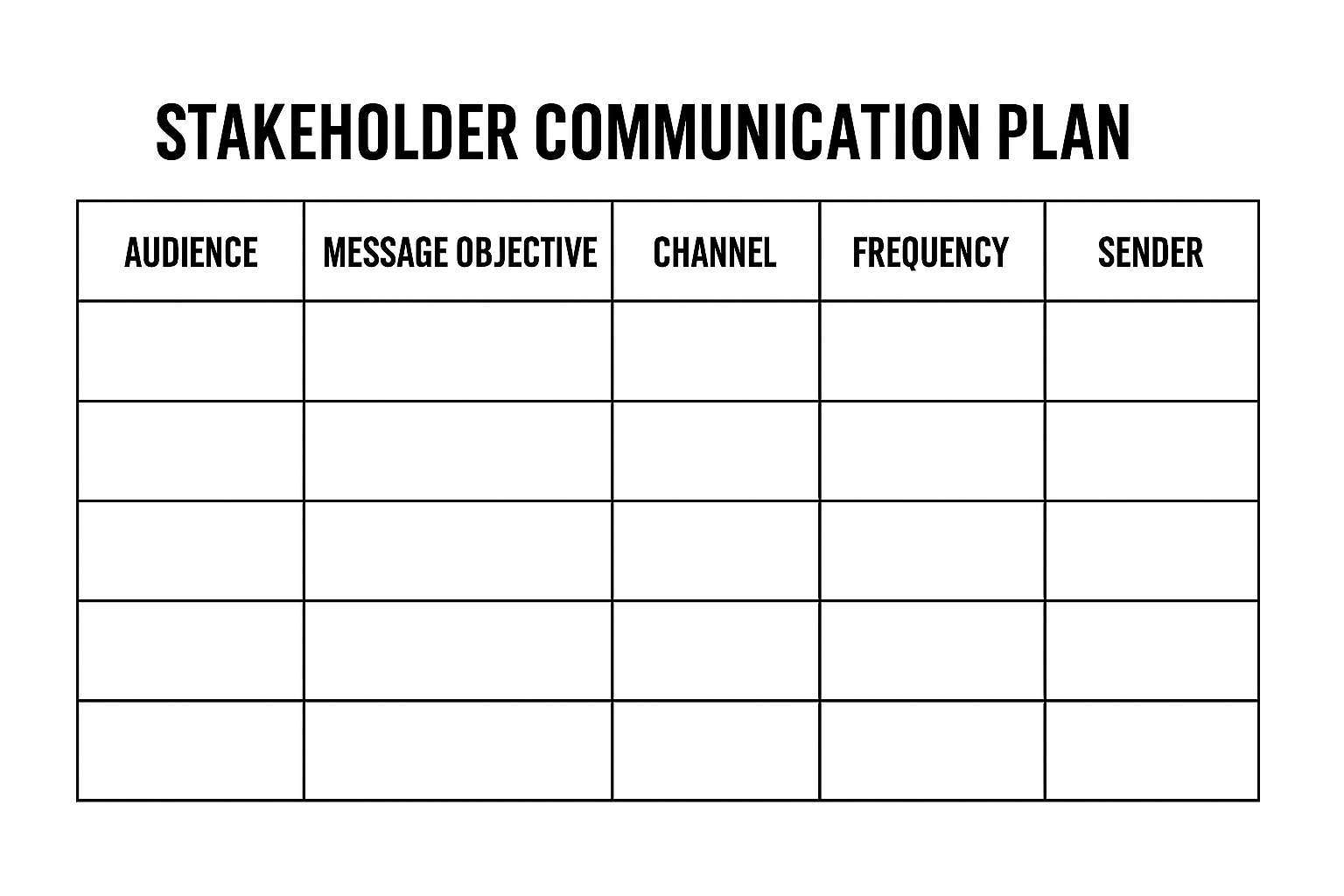
Follow the steps below to effectively plan communications and engage key stakeholders. Consider using a template like the following to plan ahead:
Step 1: Identify and Map Stakeholders
Start by identifying everyone who will be affected by the change—or who has influence over its success. Then, map them based on their level of interest in the change and their power to impact it.
Best Practices
- Create a comprehensive list of internal and external stakeholders
- Use a power-interest matrix to classify stakeholders (high/low power vs. high/low interest)
- Identify champions, skeptics, blockers, and influencers early
Mini Case Example:
A logistics company is transitioning to a new warehouse management system. The change team uses a stakeholder matrix to group their audiences:
- High power, high interest: Warehouse managers, IT leaders
- High power, low interest: Executive team
- Low power, high interest: Frontline employees
- Low power, low interest: External vendors
This helps them prioritize engagement efforts where it matters most.
Step 2: Understand Stakeholder Needs and Concerns
Once stakeholders are mapped, dig deeper. What are their priorities? What are they likely to fear or resist? What’s their current level of understanding or trust?
Best Practices
- Conduct interviews, focus groups, or quick surveys
- Use empathy mapping to anticipate concerns
- Identify what motivates each group (efficiency, recognition, security, etc.)
Mini Case Example:
In a regional bank undergoing a branch consolidation, HR conducts listening sessions with frontline staff. The sessions reveal a fear of layoffs and confusion about relocation. This insight shapes more empathetic messaging and leads to proactive job support programs.
Step 3: Tailor Your Messages to Each Audience
One-size-fits-all communication doesn’t work in change management. Each stakeholder group should receive messages that speak directly to their roles, needs, and concerns.
Best Practices
- Develop core messages and then adapt them per audience
- Address both organizational goals and personal impact
- Keep tone and language appropriate for each group
Mini Case Example:
During a university-wide shift to a new learning management system, the change team creates separate messaging guides for:
- Faculty: Emphasizes academic freedom, grading efficiency, and support services
- Students: Focuses on usability and mobile access
- IT Staff: Highlights system stability and integration potential
All groups receive consistent strategic messaging—but in language and framing tailored to their contexts.
Step 4: Choose the Right Communication Channels
The success of a message often depends on how it’s delivered. Using the wrong channel can dilute the message—or cause it to be ignored.
Best Practices
- Use a mix of channels: email, meetings, videos, intranet, town halls, 1-on-1s, etc.
- Match the message’s importance with the formality of the channel
- Ensure accessibility and timing fit the audience’s routines
Mini Case Example:
A software firm introducing hybrid work policies uses a multi-channel strategy:
- Company-wide webinar for announcement
- FAQ document posted on the intranet
- Short, engaging video explaining key takeaways
- Team leads held follow-up discussions during staff meetings
This ensures wide reach while allowing room for conversation and clarity.
Step 5: Develop a Communication Plan and Cadence
Effective stakeholder communication is ongoing, not a one-time event. Create a structured plan that outlines who will receive what information, when, and from whom.
Best Practices
- Develop a detailed communication plan matrix that includes:
- Audience
- Message objective
- Channel
- Frequency
- Sender
- Build in checkpoints for updates and reminders
- Align messaging timing with milestones in the change process
Mini Case Example:
An international nonprofit implementing a new donor CRM creates a communication cadence tied to its change timeline:
- Phase 1 (Pre-launch): Monthly updates and training registration emails
- Phase 2 (Launch week): Daily tip sheets and access guides
- Phase 3 (Post-launch): Bi-weekly check-ins and a “What’s Working” internal podcast
The regular rhythm helps reduce surprises and foster a sense of momentum.
Step 6: Leverage Trusted Messengers
The messenger is often as important as the message. Stakeholders are more likely to listen to people they trust—especially when change causes uncertainty.
Best Practices
- Use a cascade communication model where executives brief senior leaders, who brief managers, who brief their teams
- Identify and train informal influencers or change champions
- Provide message toolkits to all messengers to ensure consistency
Mini Case Example:
When a pharmaceutical company overhauls its compliance protocols, it partners with respected senior scientists to lead communication. Their involvement adds credibility and addresses skepticism among R&D teams.
Step 7: Monitor, Listen, and Adjust
Communication is a two-way process. Throughout the change initiative, monitor how messages are landing and where gaps or misunderstandings persist.
Best Practices
- Collect feedback through quick pulse surveys, Q&A sessions, or team meetings
- Monitor questions, confusion, or resistance as signals to refine messaging
- Be transparent about what’s being done with feedback
Mini Case Example:
A retail chain undergoing digital transformation notices a spike in helpdesk tickets after initial rollout. Instead of blaming user error, they revise their training communications and add a live Q&A webinar, which reduces friction and boosts adoption.
Step 8: Recognize Participation and Share Success Stories
Recognition reinforces behavior and builds engagement. Highlighting small wins and success stories can humanize the change and create positive peer influence.
Best Practices
- Publicly recognize teams or individuals who embrace the change
- Share success stories in newsletters, meetings, or videos
- Tie achievements back to the change vision
Mini Case Example:
A global consumer goods company encourages department heads to submit short “success snapshots” showcasing early improvements after adopting a new collaboration platform. The snapshots are compiled into a company-wide story map, sparking cross-team enthusiasm.
*Content on this page was curated and edited by expert humans with the creative assistance of AI.