
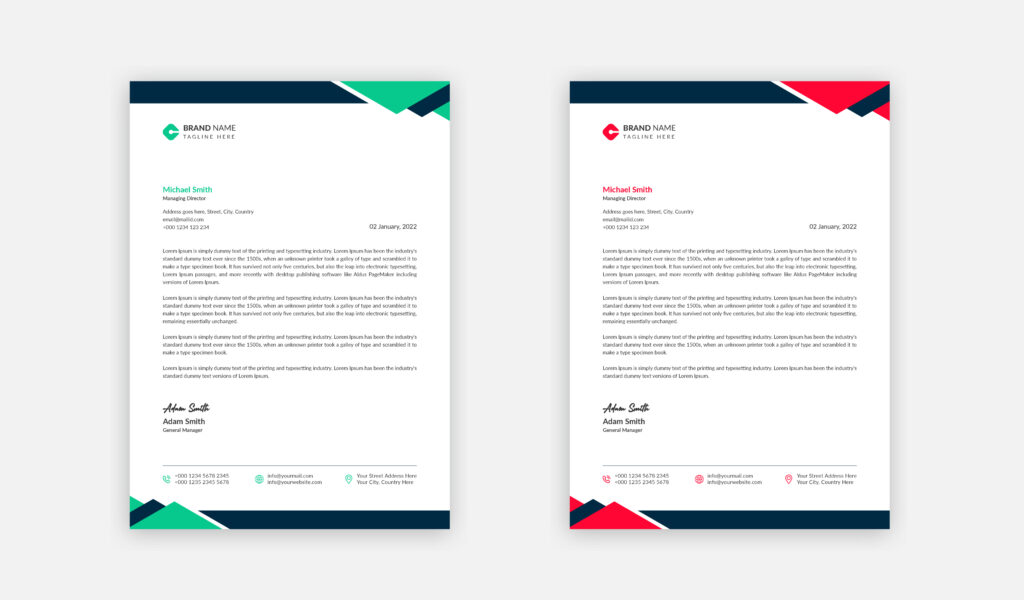
Business letters remain one of the most formal and professional ways to communicate in the workplace. Whether you’re contacting a client, supplier, job applicant, or government official, a well-written business letter communicates clarity, credibility, and respect. Mastering this format ensures your message is taken seriously and acted upon appropriately.
Writing Letters at Work (Best Practices)
Business letters should reflect your professionalism and serve a clear, specific purpose. A good business letter is formal in tone, visually clean, and written with intent.
Best Practices:
- Write with purpose—state your main point in the first paragraph.
- Use formal, respectful language throughout.
- Format for readability with proper spacing and margins.
- Keep it to one page unless absolutely necessary.
- Proofread for tone, grammar, and clarity before sending.
Avoid:
- Using slang, emojis, or contractions (e.g., don’t, can’t).
- Overloading the letter with unnecessary details.
- Sounding overly casual or emotional.
When to Use Professional Business Letters at Work
Use business letters when formal, documented communication is appropriate—especially when clarity, professionalism, or external communication is required.
Use business letters to:
- Respond to formal requests or complaints.
- Make official announcements.
- Submit proposals or applications.
- Follow up on interviews or meetings.
- Communicate with government agencies or vendors.
- Document agreements or legal matters.
Avoid letters when:
- An email or memo would suffice for quick or informal communication.
- You’re working with internal colleagues on day-to-day tasks.
- The situation is urgent—use a phone call or in-person meeting instead.
Professional Business Letter Format
(With Visual Example and All Components)
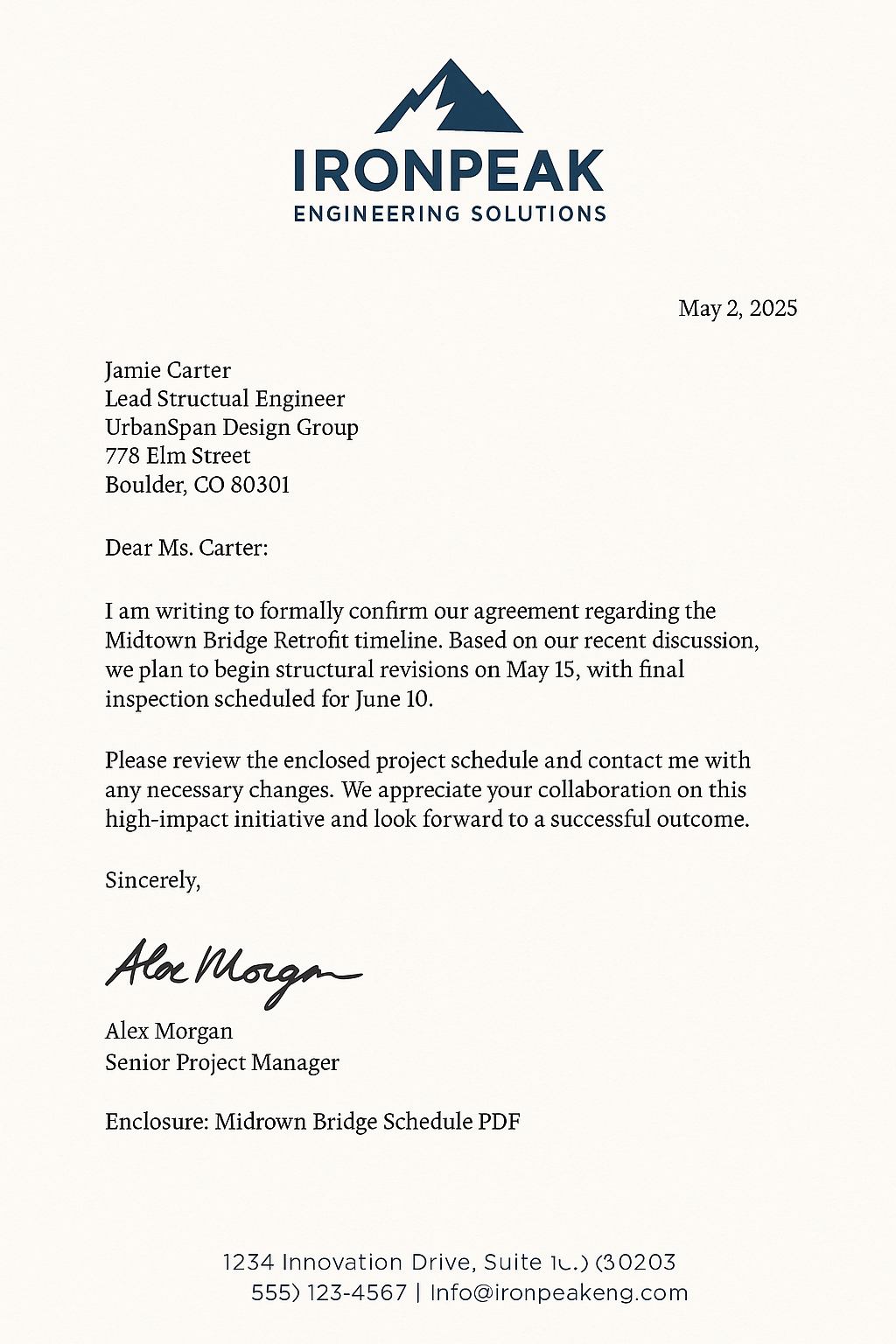
A properly formatted business letter is essential for readability and credibility. Every component matters—from margins to salutations.
Standard Formatting Guidelines:
- Margins: Use 1-inch margins on all sides.
- Font: Use a professional font (e.g., Times New Roman or Calibri) at 11–12 pt.
- Spacing: Single space the letter, but add a blank line between paragraphs.
- Alignment: Align all text to the left (block format is preferred).
- Length: Keep to one page if possible.
- Indents: Don’t indent new paragraphs
Business Letter Elements (in order):
- Letterhead with Sender’s Address
- Date
- Inside Address (Recipient’s information)
- Salutation (Greeting)
- Body Paragraphs (Opening, Middle, Closing)
- Complimentary Close
- Signature Block (Typed Name and Title)
- Enclosures or CC if applicable
Example:
Writing Effective Letters
Every business letter should deliver value to the recipient and reflect your professionalism. Use clear structure, tone, and diction to communicate your message.
Best Practices:
- Begin with a clear reason for writing—no need for fluff.
- Use short paragraphs for clarity.
- Choose formal but approachable language.
- Be specific about requests, actions, or timelines.
- Maintain a courteous, confident tone throughout.
Avoid:
- Passive or vague statements (e.g., “I was wondering if…”).
- Wordy explanations that bury the main point.
- Repeating yourself unnecessarily.
Signing Letters
A signature personalizes and finalizes your letter. Depending on the method of delivery, your signature may be handwritten or digital.
Best Practices:
- Leave three blank lines between the closing and your typed name for a handwritten signature.
- Use your full name and job title.
- Sign neatly using black or blue ink for printed letters.
- Use a high-quality digital signature if emailing as a PDF.
Avoid:
- Signing with just initials or no title.
- Using stylized or cursive fonts to fake a signature.
Distributing Letters
How you deliver your business letter matters. It impacts how quickly it’s received and how professionally it’s perceived.
Best Practices:
- Print on company letterhead for mailed letters.
- Use high-quality paper and a matching envelope.
- Convert to PDF before emailing to preserve formatting.
- Use a professional subject line in the email if sending digitally.
- Keep a copy for your records (digital or printed).
Avoid:
- Sending business letters as Word attachments—PDF is more secure.
- Handing out folded or crumpled letters.
- Using overly casual email language when delivering a formal letter.
*Content on this page was curated and edited by expert humans with the creative assistance of AI.