
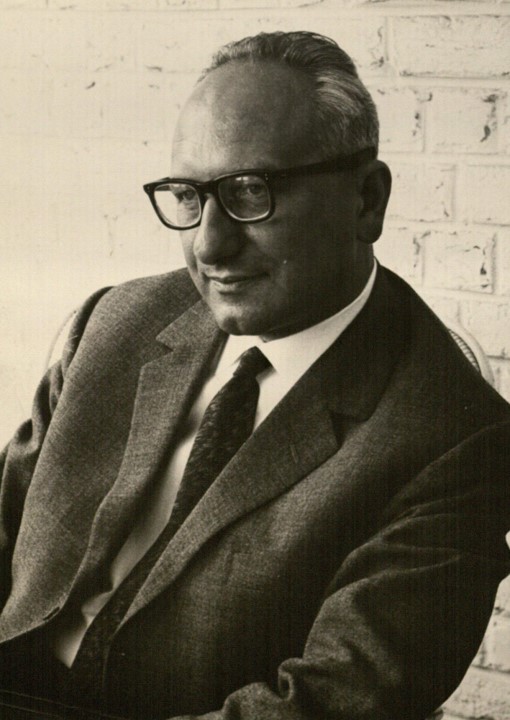
Who Was Chaïm Perelman?
Chaïm Perelman (1912-1984) was a Belgian philosopher and rhetorician, renowned for his significant contributions to the field of argumentation theory and rhetoric. He was a professor at the Free University of Brussels, where he co-authored seminal works with Lucie Olbrechts-Tyteca, notably “The New Rhetoric: A Treatise on Argumentation,” which has had a lasting impact on rhetorical and communication studies.
Perelman’s Teachings About Rhetoric
Chaïm Perelman is best known for his development of the “New Rhetoric,” a theory of argumentation that diverged from traditional Aristotelian rhetoric by focusing on the practical aspects of persuasion in everyday discourse rather than formal logic. Perelman argued that rhetoric is essential for understanding how people persuade each other in non-scientific contexts, such as politics, law, and ethics. He emphasized that argumentation is not about discovering absolute truths but about reaching agreements that are acceptable to a particular audience. Perelman’s “universal audience” concept suggests that arguments should be constructed in a way that they can be accepted by an idealized, rational audience.
Perelman’s work redefined the scope of rhetoric by highlighting its role in shaping human values and beliefs through practical reasoning. He and Olbrechts-Tyteca developed a comprehensive taxonomy of argumentative techniques, showing how various rhetorical strategies can be used to persuade different types of audiences.
Perelman’s Influence in the Study of Rhetoric and Communication
By shifting the focus from formal logic to practical argumentation, he revitalized interest in rhetoric as a crucial component of human communication. His ideas have been instrumental in bridging the gap between rhetoric and philosophy, emphasizing the importance of rhetoric in ethical and political deliberation.
Perelman’s “New Rhetoric” has been particularly influential in legal studies, where his concepts of argumentation have been applied to understand judicial reasoning and the practice of law. His work has also impacted fields such as political science, communication studies, and education, where his theories provide frameworks for analyzing how arguments are constructed and received in various contexts.
*Content on this page was curated and edited by expert humans with the creative assistance of AI.