
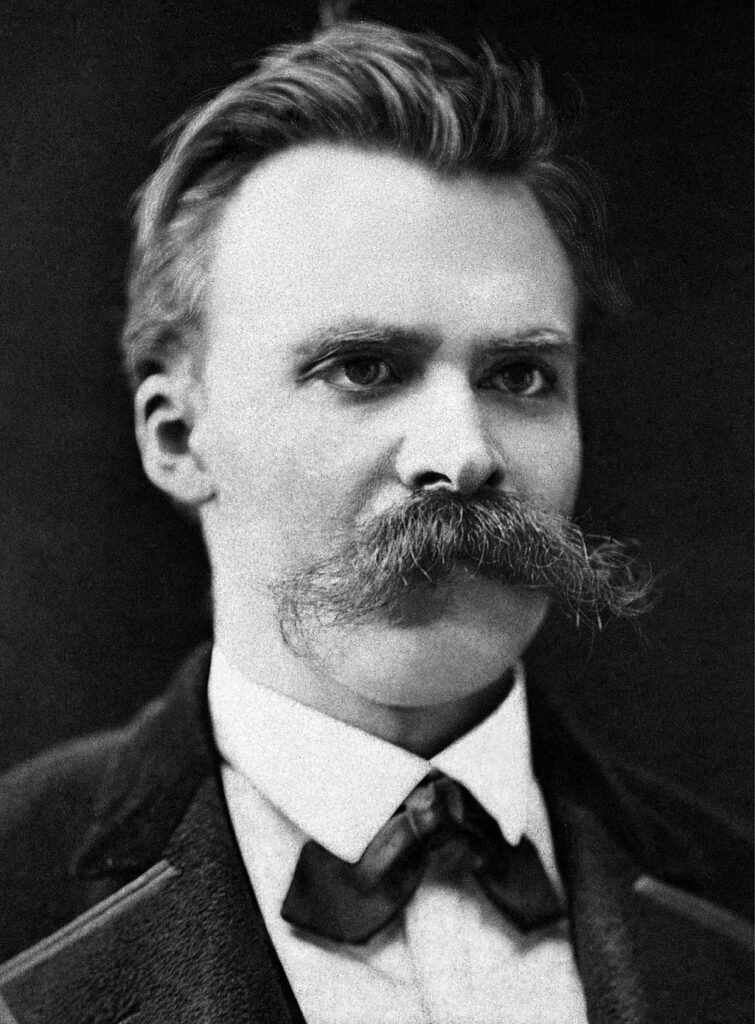
Who Was Friedrich Nietzsche?
Friedrich Nietzsche, born in 1844 in Röcken, Prussia (now Germany), was a renowned philosopher, cultural critic, poet, and philologist. His provocative ideas on truth, morality, religion, and the nature of existence have made him one of the most influential and controversial thinkers in Western philosophy. Nietzsche’s works, such as “Thus Spoke Zarathustra,” “Beyond Good and Evil,” and “The Birth of Tragedy,” challenge conventional beliefs and have had a profound impact on various fields, including philosophy, literature, and cultural studies.
Nietzsche’s Teachings on Rhetoric
Nietzsche’s approach to rhetoric was complex and often critical. He viewed rhetoric not just as a tool for persuasion but as a fundamental aspect of human communication that shapes our perception of reality. In his early work, “On Truth and Lies in a Nonmoral Sense,” Nietzsche argues that what we consider truth is merely a collection of metaphors and rhetorical constructions, suggesting that all language is inherently rhetorical. He believed that traditional notions of objective truth are illusions created by persuasive language. Nietzsche also critiqued the moral and ethical pretensions of classical rhetoric, viewing it as a means of imposing power and control. He emphasized the performative and aesthetic dimensions of rhetoric, seeing it as a creative force that could both reveal and distort reality. For Nietzsche, the power of rhetoric lay in its ability to transform perceptions and challenge established norms.
Nietzsche’s Influence on the Study of Rhetoric and Communication
Friedrich Nietzsche’s radical ideas about the nature of truth and language have inspired generations of scholars to reconsider the foundations of rhetorical theory. Nietzsche’s assertion that all language is metaphorical and rhetorical has influenced postmodern and deconstructive approaches to rhetoric, which question the stability and objectivity of meaning. His work has encouraged a more critical and skeptical view of rhetoric, highlighting its role in shaping power dynamics and social structures. Nietzsche’s emphasis on the performative and aesthetic aspects of rhetoric has also contributed to the development of rhetorical criticism and the study of the rhetoric of literature and culture. By challenging traditional notions of truth and communication, Nietzsche has expanded the scope of rhetorical studies, encouraging a deeper exploration of the relationship between language, power, and reality.
*Content on this page was curated and edited by expert humans with the creative assistance of AI.